
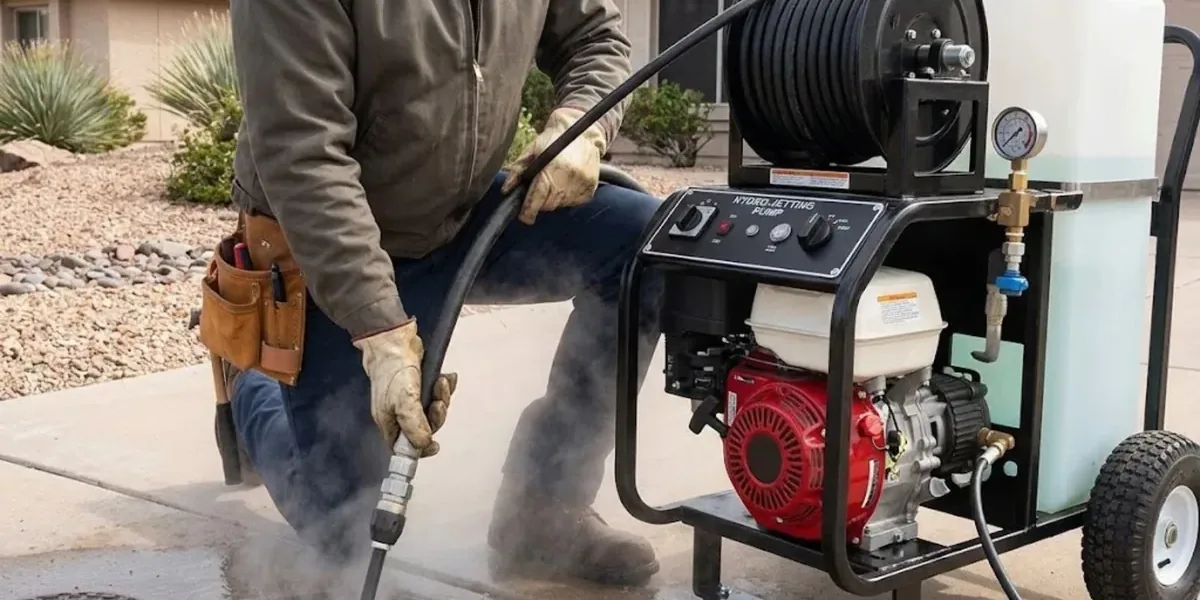
Emergency Hydro Jetting in Mount Laurel, NJ
When a line is packed with grease, silt or roots and a cable only punches a hole, hydro jetting washes the pipe wall clean. Our 24/7 dispatcher can send a licensed plumber with a jetter and a camera.
A water jetter does what a cable cannot reach
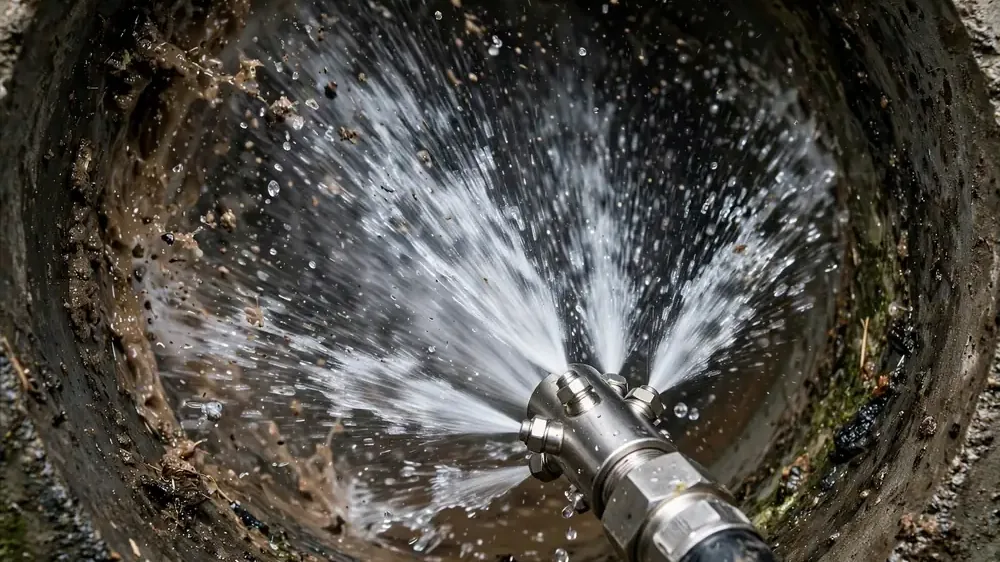
Hydro jetting is the cleaning of a drain or sewer pipe with a high pressure stream of water fired from a nozzle on a hose. The jets scour the inside wall instead of poking a hole through the blockage. If water is rising in a tub or floor drain right now, stop all water use, keep people clear of the wet floor and call the 24/7 line, which is answered nights, weekends and holidays.
The drain that works for a week and then slows down again
Plenty of homeowners never go looking for jetting. They just notice that the same line gets snaked, flows for a few days, then slows, and the pattern repeats. A cable bores a round hole through grease, paper or roots and leaves the rest of the coating on the pipe wall. The flow comes back, but the pipe is still narrower than it should be.
That slow narrowing is what a jetter is built for. It flushes the coating down the line and out of the pipe, so the full diameter is back in use. If you have paid for the same cleaning more than twice in a year, ask about this and about a camera look at the pipe.
Nozzles are chosen for the clog, not the other way around
A jetter is only as good as the nozzle on the end of the hose. Here are the main types a plumber carries.
Penetrating nozzle
A forward-facing jet that bores through a hard plug so the rest of the cleaning can reach the pipe.
Rotating nozzle
Side jets spin to scour the wall in a full circle, good for grease rings and mineral scale.
Root cutting nozzle
A heavier head with a cutting jet or blade for fine roots at joints, used with care in older pipe.
Flushing or sludge nozzle
A wide spray that pushes silt and debris through a long run toward the cleanout or manhole.
Drain cleared before and clogged again? Call the 24/7 line and ask about a jetter and camera.
Call (609) 547-1417How jetting is done and why pressure is kept in check
The plumber opens a cleanout, or pulls a toilet when there is no better access, and feeds the hose into the line with the nozzle pulling itself forward on rear-facing jets. Water volume carries debris out of the pipe, not just the pressure. The pressure is set for the pipe material and condition, and on an old line the plumber starts low and works up only as far as the job needs.
In practice, PVC and ABS tolerate jetting well. Older cast iron takes it when the pipe is sound, though heavy scale can loosen in sheets and need a second pass. Clay and Orangeburg are another story, which the next section covers.
What to do when jetting cannot fix the drain
Jetting cleans, it does not repair. It cannot close a crack, pull a joint back into line or lift a sagging section of pipe. In old cracked clay or a thin walled cast iron line, a strong jet can open a weak spot, so a good plumber looks first and sometimes advises against it.
A belly, which is a low spot where water sits, will keep collecting solids after a perfect cleaning. You can expect the line to run clear for a while, then settle again. Fixing that means a repair, and our sewer line repair page explains how that is decided.
Camera before and camera after
A camera pass on either side of the jetting turns a guess into a record. This is the usual order.
- Look before pressure goes in. A small camera on a flexible rod checks the pipe for cracks, offsets, roots and bellies, so the plumber knows if jetting is safe.
- Clear a path if needed. A fully blocked line may get a cable pass first so the camera and the hose can travel.
- Jet the line section by section. The nozzle is pulled back toward the cleanout, working through the grease and scale in stages.
- Camera the pipe again. The second pass shows whether the wall is clean and whether anything the water uncovered needs attention.
- Go over the video together. You see what changed, where any damage sits and what the choices are. The camera is also how to answer a buyer's question about the sewer lateral.
Jetting, cable machine or a repair
Each tool has a job. The table lays out when each is the honest choice.
| Situation | Better choice | Why |
|---|---|---|
| Single sink clog with a soft blockage. | Hand tool or cable. | Quick and gentle, and no need for a jetter. |
| Grease or scale coating on a branch line. | Hydro jetting. | Cleans the wall and delays the next clog. |
| Large tree roots filling a main. | Heavy cable with cutters, then possibly jetting. | Cutters remove the mass, and the jet washes out the fines. |
| Cracked or collapsing old pipe. | Repair or lining, not jetting. | Pressure can worsen a weak spot, see pipe repair options. |
| Clog that returns in weeks. | Camera, then jetting if the pipe is sound. | Finds the reason before spending on a cleaning. |
Our drain cleaning page covers cable work in more detail, and main line cleaning covers the heavy cable machine used for roots.
Why Mount Laurel lines get stubborn
Local note on the township's pipes
Homes of that era often have mixed pipe. Cast iron under the slab or in the basement with PVC added later is a common mix, and jetting suits sound cast iron but needs a camera look first on anything fragile. Cast iron develops a rough scale inside, and that scale snags grease and paper. A jetter is one way to knock it back before the pipe narrows enough to back up.
The township's water quality summary lists 63 to 138 ppm across the supplies it names. The MUA and New Jersey American Water sit near 80 to 100 ppm, so mineral scale is a fair suspect in older lines. Hard water leaves mineral film in hot drain lines. That film plus kitchen fat is a typical jetting job, so mention any repeat slow drains when you call.
Sewage backing up and a cable has not held
If a backup has returned after a recent cleaning, the line may need more than another pass. We answer day and night, and a licensed plumber can come out to decide on jetting or a camera check. Do these things while you wait.
- Shut off water use. No laundry, no flushing and no running taps, because every gallon goes to the lowest opening.
- Tell the dispatcher the history. Mention when it was last cleaned, what was used and what came out, such as roots or grease.
- Locate the cleanout. It is often a capped pipe near the foundation or in the basement. Clear the space around it.
- Protect the floor. Move rugs and boxes off the floor near drains, and put towels or a wet vacuum nearby if you have one.
- Keep chemicals out of it. A pooled acid cleaner in the line is a hazard for the person on the jetter.
What moves the cost of a jetting visit
Jetting uses heavier equipment than a cable, and the time depends on how much is in the pipe. The plumber gives a price once the facts are in.
- Length and size of the line. A short branch is quick, while a long main with a run to the street takes more time and water.
- Access. A good cleanout speeds the job, while pulling a toilet or digging out a buried cleanout adds work.
- What is in the pipe. Light grease is one pass, but roots, heavy scale or packed silt need multiple passes.
- Camera work. A before and after video adds equipment and time, and it also tells you whether a repair is next.
- Hour of the call. Overnight and holiday visits are priced differently from a daytime appointment.
Homeowners insurance treats sudden and accidental damage differently from slow buildup, and many policies treat a backup as an optional add-on. Read your policy or ask your agent before assuming it applies.
Call (609) 547-1417 to describe the clog. The dispatcher asks a few questions and the plumber confirms the price before any hose goes in.
Where jetting fits with the rest of your plumbing
A clean line is a good time to check what else is going on. If a floor drain in the basement keeps overflowing in storms, the cause may be groundwater or a failed pump, not the sewer, and that is a job for sump pump repair. If you hear water running with no tap on, see leak detection first.
After a big buildup is cleared, think about a schedule. Some kitchens with heavy cooking need a cleaning every year or two, while a well-kept home may never need another. Nearby towns we serve include Evesham and Medford.
Jetting questions we hear before the plumber arrives
Yes. The 24/7 line is answered by a dispatcher through nights, weekends and holidays. Call (609) 547-1417, describe the backup and a licensed plumber is sent when one is available.
On sound PVC, ABS and cast iron it is routine, since the plumber sets the pressure to the pipe. On old cracked clay or weak cast iron it can make things worse, which is why a camera look comes first.
A cable drills through the blockage, while a jetter washes the whole wall. Think of it as a hole versus a clean pipe. Many jobs begin with a cable and finish with jetting.
A jet with a root nozzle can handle fine roots. Thick roots usually need a cable machine with cutter heads first, then jetting to flush the debris. If the roots have broken the pipe, you will also need a repair.
A drain that clears briefly and then slows again is the classic sign. A camera look confirms grease, scale or silt, and rules out damage that jetting should not touch.
Small consumer jetters exist, but a hose that loses control in a pipe, or pressure used on a weak line, can cause damage and water in the house. For anything past a simple clog, a plumber with a camera is the safer route. If the camera finds a damaged section, any repair is done to the National Standard Plumbing Code that New Jersey adopts, and the Mount Laurel construction office can say whether a permit applies.