
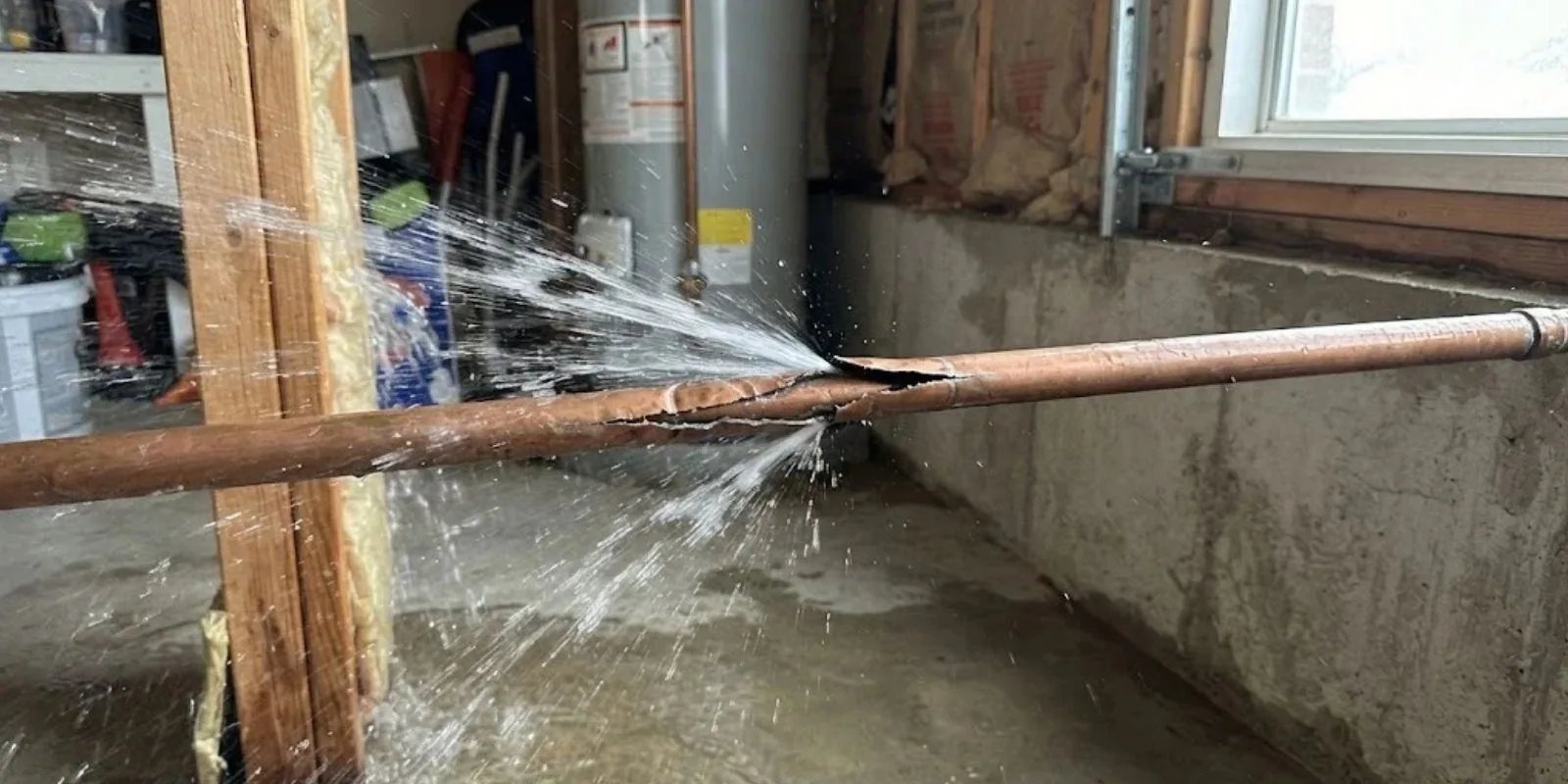
Emergency Burst Pipe Repair in Mount Laurel, NJ
A burst pipe can put gallons on the floor every minute. The 24/7 line answers nights, weekends and holidays, and the first ten minutes are yours to use well.
A burst pipe is a split you stop first and repair second
Burst pipe repair means stopping the flow, drying the affected area, and replacing or patching the section of pipe that failed. If you are reading this with water on the floor, go straight to the emergency block below and then call (609) 547-1417. Someone picks up the 24/7 line at any hour, and you can keep working through the steps while you talk.
Pipes burst for two broad reasons. Water freezes and expands inside them, or aging metal wears through at a weak point. Which one you have changes the repair, so the plumber will look at the break itself before choosing a fix.
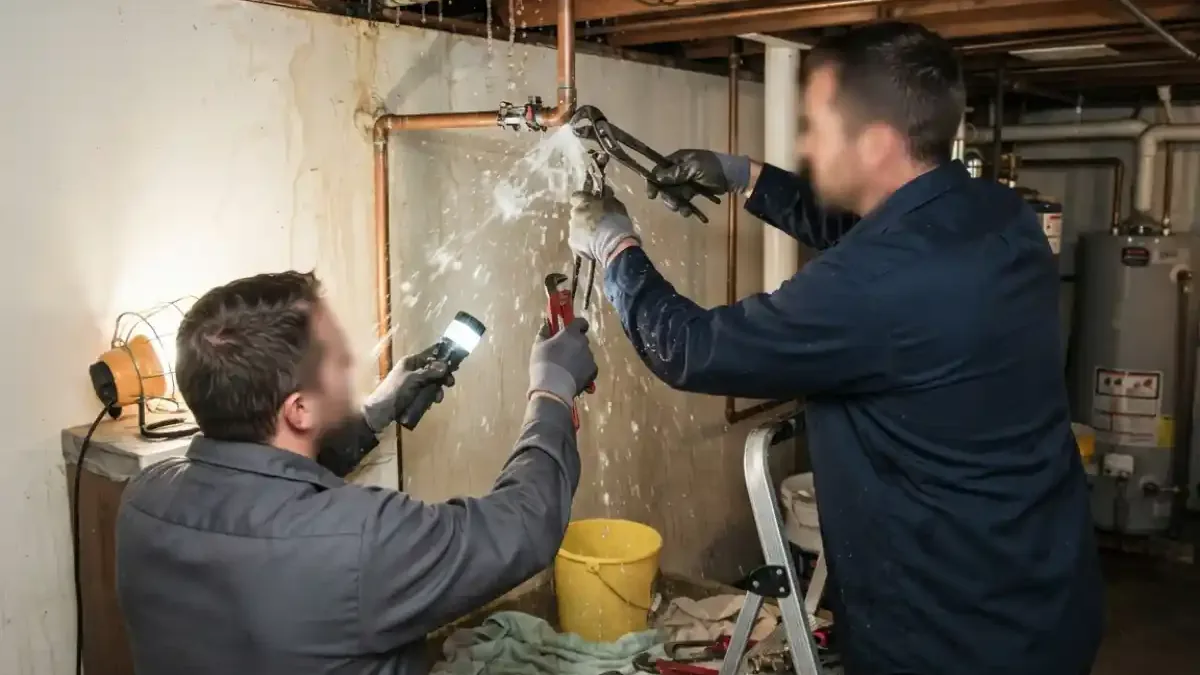
Water on the floor? Close the main, then call the 24/7 line.
Call (609) 547-1417Water is pouring from a pipe, so use the first ten minutes well
Speed matters more than neatness here. A split supply line can move a large volume of water through a ceiling or floor in the time it takes to find a phone number, so do these in order.
- Find the main shutoff and close it. It is usually where the water line enters the house, often in the basement or a utility closet, with a round wheel or a lever handle. Turn a wheel clockwise until it stops. A lever is closed when it sits crosswise to the pipe.
- Open the lowest faucet and the highest one. This drains the trapped water and relieves pressure on the broken section. Leave them open until the plumber says otherwise.
- Think about electricity before you step in. If water is near outlets, the panel, a basement sump or a ceiling fixture, switch off power to that area from the breaker only if you can reach the panel on dry floor. If you cannot, stay out and tell the dispatcher.
- Turn off the water heater. With the cold supply closed, an electric heater should be switched off at its breaker to protect the elements, and a gas unit set to pilot or off.
- Start moving what water has not reached. Lift rugs, move electronics and furniture, and use buckets, towels or a wet vacuum on standing water.
- Photograph everything. Take pictures of the break, the wet areas and the damaged belongings before cleanup, since they will matter if you file an insurance claim.
- Call the 24/7 line. Tell the dispatcher where the water is, whether the main is closed, and whether any part of the house has no power.
If the water coming out is hot, or you smell gas, leave the room and call from outside. Gas is the exception to all of the above, and a gas smell means everyone leaves, then calls 911 and the gas utility, then calls us.
How a New Jersey winter splits pipes in the first place
Water expands as it freezes, and a pipe full of ice can burst even though the split often shows up only after the ice thaws and water starts to flow. The most exposed lines are the ones in unheated spaces, such as a garage wall, a crawlspace, an exterior wall behind a kitchen sink, or an uninsulated basement corner. A hose bib with the hose still attached is another common failure, since trapped water cannot drain from it.
Supply pipes in exterior walls, crawl spaces and unheated corners are the usual places for a winter split, so check those spots first when a ceiling or wall starts to drip. If you have a sink on an outside wall, opening that cabinet door on the coldest nights lets house air reach the pipes, which is one of the cheapest protections there is.
Pipe type decides how the break behaves
A plumber recognizes the failure pattern from the pipe material and the look of the break.
| Material | How it fails | Typical repair |
|---|---|---|
| Copper. | Freeze splits show as a long slit, while pinholes show as tiny jets from the inside. | Cut out the damaged length and sweat in new copper or use a press fitting. |
| PEX. | Tolerates freezing better, but fittings and kinks can still fail. | Replace the damaged section with crimped or expanded fittings. |
| Galvanized steel. | Corrodes from inside until a thin wall gives way. | Replace the run, since neighbors are usually thin too. |
| CPVC. | Becomes brittle with age and cracks at fittings. | Replace sections, and compare the rest of the line. |
| Polybutylene. | Fittings and tube degrade from the inside. | Replace the section and discuss the whole system. |
When one section is wearing out in several places, a repair buys time but not a fix. That is the point to ask about repiping the house.
Pinhole leak or freeze split? The cause changes the plan
A freeze split is a single event in a cold-exposed spot, and once repaired, the rest of the line may be perfectly sound. A pinhole in copper is different. It often means the pipe is corroding from the inside, and a second pinhole elsewhere in a few months is common.
If the plumber finds green stains, scale or several tiny leaks along one run, expect an honest conversation about replacing a longer section instead of patching each hole.
Repairs that are honest and repairs that only buy time
A temporary fix is fine for a few hours, and not much longer. Rubber and clamp repair sleeves, push-fit couplings and epoxy putty can slow a small leak enough to turn the water back on for a night, but none of them is a permanent repair on a split or corroded pipe. A plumber who installs one should tell you it is temporary and plan the real repair.
Permanent repair means cutting out the damaged length and joining new pipe with soldered, pressed or crimped fittings, depending on the material. Permit rules vary, so ask the Mount Laurel construction office whether your work needs one. New Jersey adopts the National Standard Plumbing Code for its plumbing subcode, and the plumber works to it.
Drying out after the pipe is fixed
Stopping the leak is half the job. Moisture left in framing and insulation grows mold, so drying matters.
- Remove standing water. Wet vacuums and pumps clear the floor, and saturated rugs and padding usually come out.
- Open the area to air. Fans, open cabinets and wall cavities moving air are the plain, effective tools.
- Use a dehumidifier. Run one in the room and keep doors closed so it dries the space instead of the whole house.
- Check for hidden wet spots. Wet insulation behind walls does not always show on the surface. A moisture meter finds it.
- Know when to bring in a drying company. Large losses, wet ceilings that sag or any sewage involvement call for water mitigation specialists, which is a separate trade.
What shapes the bill for a burst pipe
A burst pipe call is priced by the work the break needs, not by the panic around it. The plumber can describe the main drivers once they see the damage.
- Location of the break. A split in an open basement joist bay is quick to reach, while one behind tile or a finished ceiling needs access work.
- Pipe material and size. Copper, PEX and galvanized each take different fittings and different time, and larger lines cost more to replace.
- How much pipe is bad. A single split is one repair, while several weak spots may justify replacing a whole run.
- Timing and access. Work on nights, weekends and holidays follows the plumber's after-hours schedule, which is reflected in the quote.
- Walls and finishes. Drywall, insulation and paint after the repair are often a separate contractor's work.
On insurance, homeowners policies often treat sudden and accidental damage differently from gradual leaks or wear, so read your policy or ask your agent before assuming. A burst caused by a sudden freeze is often treated differently than a slow pinhole, so keep your photos and any receipts for the claim.
You get a clear price before work starts. Call (609) 547-1417 and describe the pipe, and the dispatcher can talk through the job.
Keeping pipes from splitting next winter
Know where the main valve is and test it once a year, since a valve that has not moved in twenty years can seize. Disconnect hoses before the first freeze and shut off interior valves feeding outside faucets. Insulate exposed pipes in garages, crawlspaces and outside walls with foam sleeves, and let a thin stream of water run overnight from a tap on an exposed wall during a hard freeze.
If the break came from a failed outdoor line or buried supply, see the service line repair page. If the water ended up in a lower level with a pump, a sump pump check confirms it is ready for the next flood. For drips you cannot find, a leak search pinpoints them. Neighbors in Evesham and elsewhere nearby get the same night-and-weekend dispatch.
Burst pipe questions people ask in the middle of the mess
Yes. The 24/7 line is staffed on nights, weekends and holidays, and same-day appointments are offered when available. Close the main valve first, then call and describe where the water is.
Look where the water line enters the house, often a basement wall, utility room or near the water heater. Many homes also have a valve outside by the meter. If you cannot find or turn it, tell the dispatcher right away.
Only if you can reach the panel without stepping through water. If the floor is wet around it, stay out and let the plumber or an electrician handle it. Never touch switches or outlets with wet hands.
A pipe that is frozen but not split can be thawed with a hair dryer or warm towels, working from the faucet end back. If water starts spraying as it thaws, close the main and call. Never use an open flame.
No. It is a temporary measure that stops a small leak for a short time. A permanent repair cuts out the bad section and joins new pipe. If a sleeve is on a pipe that is corroding, expect it to leak again nearby.
Policies differ, and many treat sudden bursts differently from slow leaks. Photos, a written description of the break and the plumber's invoice help. Ask your agent before assuming.
Pipes on exterior walls or in cold corners can freeze while the rest of the house is warm. Corroded copper and old galvanized pipe can also fail with no freeze at all, so a heated home is not proof of a freeze.