
Emergency Leak Detection in Mount Laurel, NJ
Hidden water loss gets found with instruments first and tools second. The 24/7 line is open when the leak cannot wait.
Finding hidden water loss without tearing into the house
Leak detection is the process of locating a water leak you cannot see, using instruments that measure flow, pressure, sound and temperature. The goal is a precise spot to open, so a plumber cuts a small hole instead of a long trench or a whole wall. Mount Laurel 24/7 Plumbing sends licensed plumbers with this equipment, and the line is staffed nights, weekends and holidays.
If water is spraying, pooling or soaking a ceiling right now, shut off the main valve first and then call. A leak that is only suspected can wait for a daytime visit, and a leak that is flooding a room cannot.
The bill went up and nothing looks wet
Most hidden leaks announce themselves through the household instead of through a puddle. These are the experiences that usually lead to a call.
- The water bill climbed for a month or two and nobody changed their habits.
- The meter dial or low-flow triangle keeps moving after every faucet, appliance and hose is off.
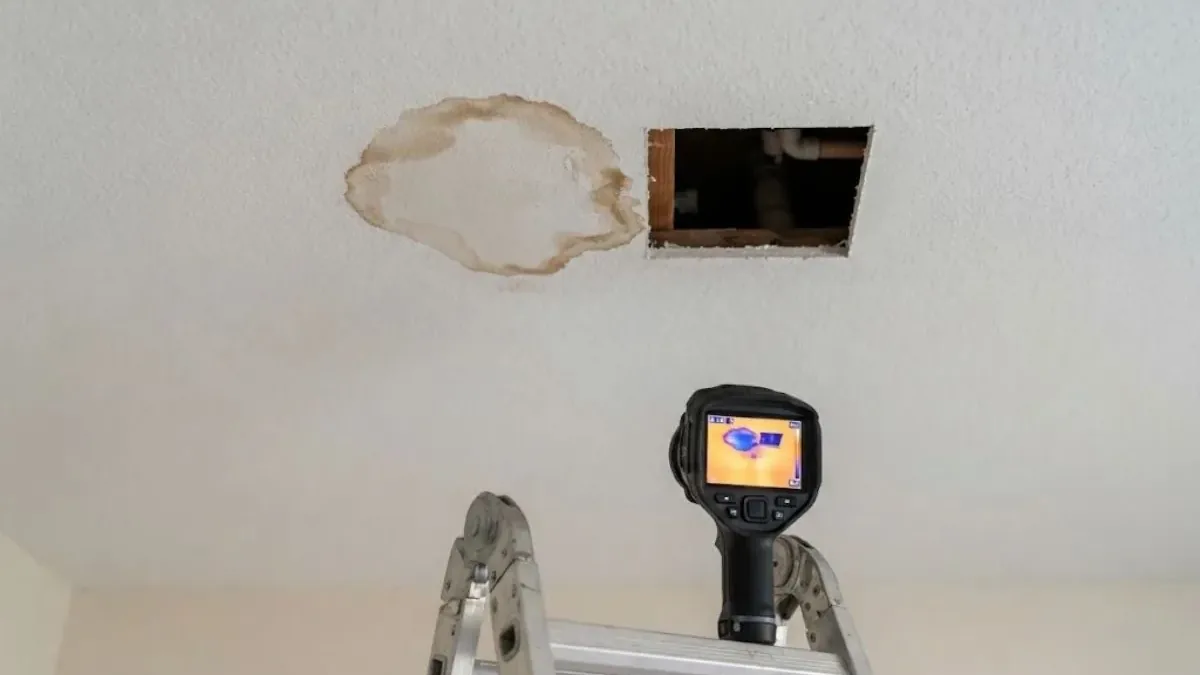
- A ceiling stain is growing, or paint is bubbling on a wall below a bathroom.
- One patch of floor feels warm underfoot, which can point to a hot line leaking in a slab.
- You hear faint running or hissing water at night when the house is quiet.
- Water pressure has dropped at every fixture, not just one.
- A section of lawn near the street stays soggy or greener than the rest.
Any one of these is a reason to test, and two together make a leak very likely.
What an ordinary month of water looks like
The Mount Laurel water utilities report that the average customer uses about 6,000 gallons a month, and often more than 10,000 in summer when lawns and pools are running. Those figures are a yardstick you can hold your own bill against.
If a household of a few people is well over that average in a cool month with no new pool, a guest or a lawn project, water is probably leaving through a pipe.
Meter moving with everything off? Call the 24/7 line and describe what you see.
Call (609) 547-1417How a leak gets narrowed down before anyone cuts a wall
The sequence moves from the whole house down to a few square feet, and each step rules out a large area.
- Read the meter with everything off. The plumber shuts off fixtures and appliances, watches the meter for movement, and notes the rate, which tells you how serious the loss is.
- Isolate the supply line. Closing the main valve at the house and watching the meter separates a leak inside the home from one in the buried line outside.
- Pressure test sections. Gauges and temporary caps hold pressure on hot lines, cold lines and branches in turn, and a falling needle shows which run is losing water.
- Listen with acoustic gear. Ground microphones and pipe sensors pick up the sound of water escaping, and the loudest point on the floor or ground marks the likely spot.
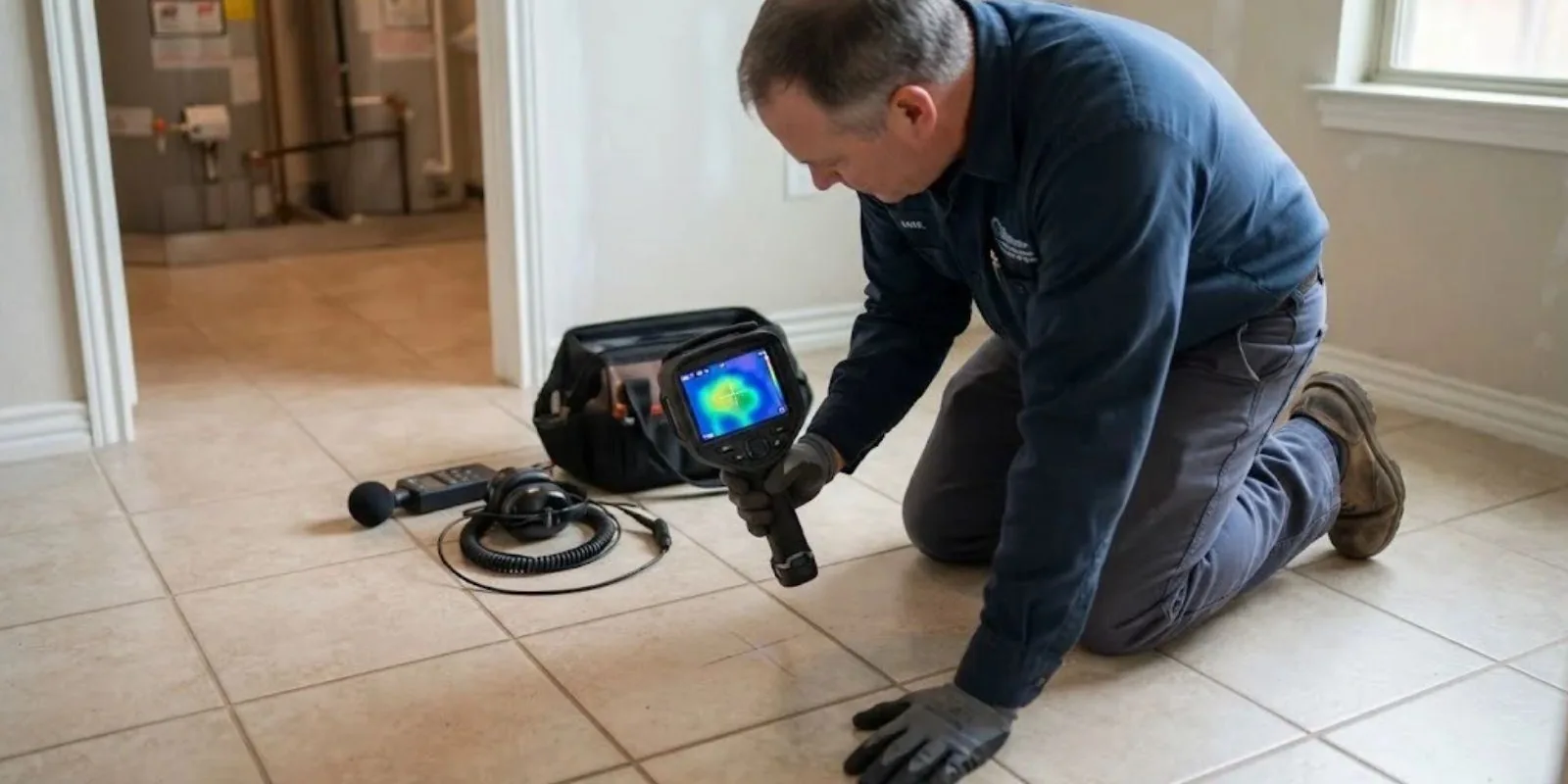
- Scan with thermal imaging. A thermal camera shows cool damp areas and warm hot-line leaks behind drywall and under floors without removing anything.
- Confirm before opening. Moisture readings, a camera on drain lines or tracer gas on stubborn cases confirm the spot, then the plumber marks it for the smallest practical opening.
Which tool finds which kind of leak
No single instrument finds everything. The plumber picks from this set based on where the water is going.
| Method | Best for | Trade-off |
|---|---|---|
| Meter test. | Confirming a leak exists and how fast. | Shows loss, not location. |
| Pressure test. | Hot or cold supply branches and slab lines. | Needs sections isolated first. |
| Acoustic listening. | Pressurized leaks in pipes and buried lines. | Plastic pipe and background noise dull the sound. |
| Thermal imaging. | Wet drywall, ceilings and warm slab spots. | Shows temperature, so it needs a moisture check to confirm. |
| Tracer gas. | Small leaks that sound and heat will not reveal. | Slower setup and used when other steps stall. |
| Drain camera. | Leaks in drain lines that wet the soil or slab. | Sees inside the drain only, not the supply lines. |
Leaks in drain lines behave differently from supply leaks, and a pipe camera is the right tool for them. Where the camera finds a broken sewer pipe, the next step is a sewer line repair.
Slab leaks and wall leaks are different hunts
A slab leak is a break in a pipe that runs under or inside the concrete floor. Signs include a warm floor spot, a meter that never stops, and a hot water bill that jumps, because many slab leaks sit on the hot line from the water heater. Finding one relies on pressure testing, listening and thermal scans, and the repair is usually a spot dig through the floor or rerouting the line through the attic or walls.
A leak in a wall or ceiling is easier to reach but harder to read, because water travels along framing before it shows. The stain on the ceiling is often several feet from the source. Moisture meters and thermal images trace it back so the opening lands on the pipe and not beside it.
Why older Mount Laurel copper makes pinholes likely
Local note
Most of the township's housing was built after the mid 1960s, so copper supply lines and slab or basement drains of that age are the usual places for a slow hidden leak to start. That means copper supply lines are common, and copper that is decades old can develop pinhole leaks inside walls. A spreading stain under a bathroom in one of those homes is a realistic reason to book a search.
Water is actively coming through a ceiling or floor
A leak that is soaking drywall or running across a floor needs action before any search begins. The 24/7 line is staffed all night and on holidays, and the first minutes you spend are what limit the damage.
Do these things while the plumber is on the way.
- Close the main water valve. Turn it clockwise until it stops. If the water keeps coming, the source may be a heating loop or a drain, so tell the dispatcher.
- Cut power to the wet area. If the ceiling light fixture is dripping, switch off that breaker. Do not step into standing water near outlets or the panel.
- Open the lowest faucet. Draining the lines releases pressure and slows the leak while the house is shut off.
- Catch and move. Put a bucket under the drip, move furniture and electronics, and lift rugs so the floor can start drying.
If the water is hot and the leak is near the water heater, switch off the heater at its breaker too. Then call the 24/7 line and describe where the water appears.
What drives the cost of a leak search and repair
Finding a leak and fixing it are separate jobs with separate costs. A search can end in an hour if the meter test points at an easy spot, or run longer when a pipe is deep under concrete.
- Where the pipe runs. A leak in an open basement ceiling costs far less to reach than one under a finished floor or a patio slab.
- How many methods are needed. A leak that shows on the first listening pass is quick, while one that needs pressure testing and tracer gas takes longer.
- Size of the opening. A small access hole in drywall is a different job from cutting and patching concrete.
- Pipe material and condition. A single pinhole in copper is a spot repair, but a run with many weak spots may point toward replacing a section.
- Finish work. Drywall, paint, flooring and tile after the repair are separate trades and are often handled by someone else.
Homeowners insurance policies often treat sudden and accidental damage differently from gradual leaks or wear, so read your policy or ask your agent before assuming.
The plumber states the price of locating the leak before starting. Call (609) 547-1417 to schedule a leak check.
When the answer is not a leak in the house at all
Sometimes the meter moves because the leak is in the buried line between the street and the house. That is a different repair, covered under buried service line repair, and it can be found by closing the main and watching whether the meter still turns. A running toilet, a dripping hose bib or a leaking irrigation zone can also explain a high bill and should be ruled out first.
Before you schedule a search
Write down the meter reading, wait an hour with every fixture off, and read it again. If the number changed, tell the dispatcher, because that single fact speeds up the visit.
For customers in Moorestown, Cherry Hill and the other nearby towns, the same instruments travel with the plumber, so call from Moorestown or anywhere nearby. If the damaged pipe turns out to be failing across the whole house, ask about repiping as a longer-term fix.
Questions about finding a leak you cannot see
Yes. The 24/7 line is answered by a dispatcher on nights, weekends and holidays, and same-day appointments are offered when available. If water is flooding a room, shut off the main valve and call right away.
Turn off every faucet, appliance and hose, then watch the meter. If the dial or the small triangle keeps moving, water is going somewhere. Close the main valve at the house and watch again. If the meter stops, the leak is inside the house, and if it keeps moving, the buried line is the likely source.
Usually the search itself requires no demolition. Listening gear, thermal cameras and pressure tests locate the spot first. The repair may need a small opening, but it will be at the spot the instruments marked.
A warm patch on the floor, a meter that spins with everything off, and the sound of running water at night are the usual clues. A water heater repair check is worth doing too, since the hot line leaves the heater through the slab in some homes.
It should return toward your normal pattern within a billing cycle or two. Compare the new bill with the Mount Laurel average of about 6,000 gallons a month to see how far off you were.
No. A roof leak, an overflowing gutter or condensation can leave the same stain. A plumber can tell you honestly when the cause lies elsewhere, and a meter test is a fast way to separate the two. Once a leak is found, the repair itself follows the National Standard Plumbing Code that New Jersey adopts, so the fix should match the code and not only stop the drip.