
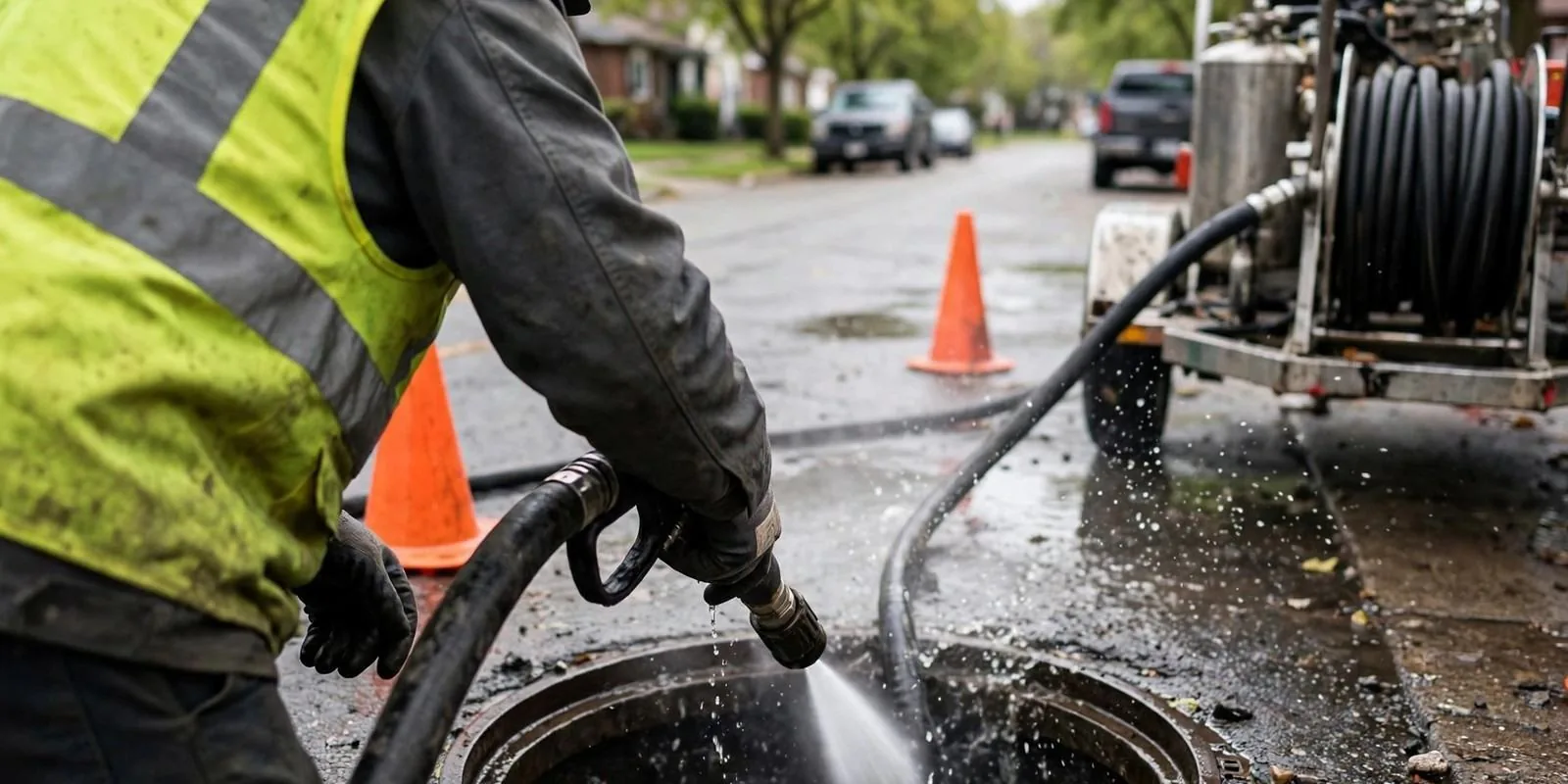
Emergency Sewer Line Cleaning in Mount Laurel, NJ
When everything in the house drains slowly or sewage rises at the lowest fixture, the main line is blocked. Call the 24/7 line and we send a licensed plumber with a machine built for the job.
Sewer line cleaning clears the pipe that leaves your house
Sewer line cleaning is the removal of roots, paper, grease and debris from the large pipe that carries all of your household wastewater to the street connection. It uses a heavy cable machine with cutter heads, sometimes followed by water jetting. The line is staffed nights, weekends and holidays, and the steps below will protect your floors until the plumber arrives.
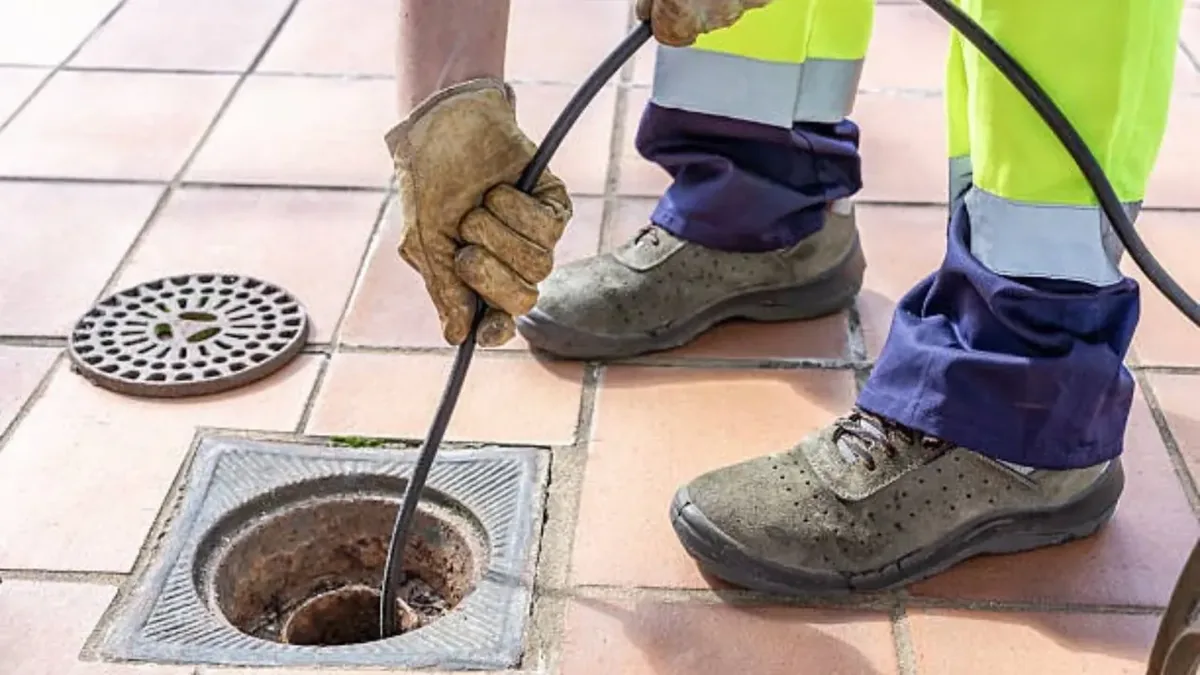
Sewage coming up in the basement or first floor
A blocked main sends wastewater to the lowest opening, and that can fill a shower stall or a floor drain in minutes. Treat the water as contaminated. This is the order we suggest while you wait for the plumber.
- Stop every water source. Pause laundry, dishwasher, showers and flushing. The water has nowhere else to go.
- Keep out of the standing water. Sewage carries bacteria. Use boots and gloves if you must cross it, and keep children and pets in another room.
- Kill power in wet areas. If water reaches outlets, a furnace or a freezer, shut off that breaker from a dry spot, or call the electric utility if the panel is wet.
- Find the cleanout cap. It is usually a threaded plug on a pipe near the foundation or on the basement wall. Leave it closed until the plumber says to open it.
- Ask neighbors and report. If the street has the same trouble, tell the Mount Laurel MUA, since the blockage may be in the public main.
Take photos of the water line on the walls and floors before cleanup, which helps if you later make an insurance claim.
Sewage at the lowest drain? Stop the water and call the 24/7 line now.
Call (609) 547-1417Why the first-floor shower or basement drain gives out first
Drains work by gravity, so the lowest opening on the system is the first place a blockage downstream will push wastewater out. In a house with a basement, that is a floor drain, a laundry tub or a basement bath. In a slab house, it is the first-floor tub or shower.
That is why a homeowner can flush upstairs and watch the basement shower fill. The cure is not at the shower. It is further down, past the point where the branches meet.
Public sewer trouble also shows up at your lowest drain
Municipal events in the township
Local news reports describe a sewer line break in January 2014. They also cover a main break with a spill in the Ramblewood section on January 13 and 14, 2016, and a force main leak on Hartford Road between Route 38 and Union Mill Road on May 31, 2016. Customers were asked to limit water use, and residents with backups were asked to call the MUA. We have no basis to say any particular home was affected.
What this means for you is practical. When a public main is down, your lowest drain is the first place sewage can surface, so know where your cleanout sits and consider asking about a backwater valve. If a street problem is the cause, the plumber can confirm that your line is clear and you can report the backup to the MUA.
What the plumber does at the cleanout
Main line cleaning follows a set path. Here is what to expect on the visit.
- Open the cleanout and test the flow. The plumber checks whether the water level drops and which side of the cleanout holds the blockage.
- Run the cable. A heavy cable with a cutter head is fed down the line until it meets the blockage. Cutter shapes are chosen for roots, grease or paper.
- Work the blockage in passes. The cable is pushed and pulled until the line flows. Larger roots may need several cutter sizes.
- Flush and verify. Water is run to confirm the whole house drains. Some jobs finish with a pass with a water jetter to clean the wall.
- Camera the line. A short inspection shows what caused the stoppage and what condition the pipe is in.
Which cutter head, and for what
| Head or tool | Used for | Limit |
|---|---|---|
| Spearhead or straight cutter. | Opening a first hole through a packed blockage. | Does not clean the pipe wall. |
| Spiral or saw-tooth cutter. | Root masses and fibrous plugs. | Roots grow back if the entry point stays open. |
| Chain or blade cutter. | Scraping scale and thicker roots on the wall. | Needs a pipe in good shape, since a sharp head can catch on a broken joint. |
| Water jetter after cutting. | Washing out the debris and the grease coating. | Not for collapsed or badly cracked pipe. |
A cable gets the water moving, but it is only part of the fix when the pipe itself is damaged.
Why a cleaned line backs up again
Roots are the most common reason a main line stoppage returns. They enter through a joint or a hairline crack, thicken as they find water, and trap paper until the line is full. Cutting clears the plug, but the opening they used is still there, so the roots grow back.
Other causes include a belly in the pipe, grease sticking to a cast iron section and flushable wipes that catch on ragged edges. If your cleaning needs to be repeated within a year, ask about a camera look and read about how a damaged line is repaired.
A look inside the pipe once the water drains
After the line flows, a camera passed through the same cleanout shows the roots, the cracks and any bellies. The recording is the best way to decide whether the cleaning was enough, and it gives you something to share with a seller or buyer. A planned version of this check is described under sewer camera inspection.
If a second fixture elsewhere is still sluggish, the blockage may be in a branch, which falls under drain cleaning. A wet patch in the yard above the line, with no rain, is a reason to also look at your water service line.
What moves the price of main line cleaning
A main line job is bigger than a sink clog, and the cost depends on the line. Ask for the price before the cable goes in.
- Distance to the blockage. A short run to a cleanout is simpler than a long line out toward the street.
- Roots or paper. Roots take more passes and heavier cutters than a soft plug.
- Cleanout access. A cleanout near the foundation saves time, while no cleanout means pulling a toilet or opening a vent.
- Camera and jetting add-ons. A camera look and a jetting pass each add time, and they often prevent a repeat visit.
- Time of the call. Late night and holiday calls cost differently from a scheduled visit.
Insurance often treats this unevenly. On the insurance side, sewer backup coverage is often a separate add-on, so ask your agent whether yours has it before assuming.
Call (609) 547-1417 and the plumber will quote once the symptoms are described.
Before you hang up with the dispatcher
Tell the dispatcher which fixtures are affected, where the cleanout is if you know it, and whether anyone poured a drain opener. Mention if the house has a sump pit or a basement bath, since both change the plan. If water is spreading toward a finished basement, say so, because that sets the priority and the equipment the plumber brings.
Main line questions before the plumber gets there
Yes. The 24/7 line is answered through nights, weekends and holidays, and a licensed plumber is sent when one is available. Call (609) 547-1417 and say which drain is overflowing.
Look for a capped pipe, often three or four inches wide, near the foundation, in the basement or in a crawl space. Not every older house has one, and the plumber can find the best access if yours is hidden.
If a neighbor has the same problem, or your cleanout shows a full pipe heading toward the street, the public main may be involved. The plumber can check your side, and you can report a backup to the Mount Laurel MUA.
Usually yes. A cable machine and jetter reach through the cleanout. Digging comes up only when the camera shows a broken or collapsed section, which is a repair job.
A line with no history of trouble needs no schedule. A line with roots may need a cleaning every year or two until the pipe is repaired, and the camera video helps set that interval. Cleaning is maintenance, but replacing sections of the lateral afterward is done to the code New Jersey adopts, the National Standard Plumbing Code.