
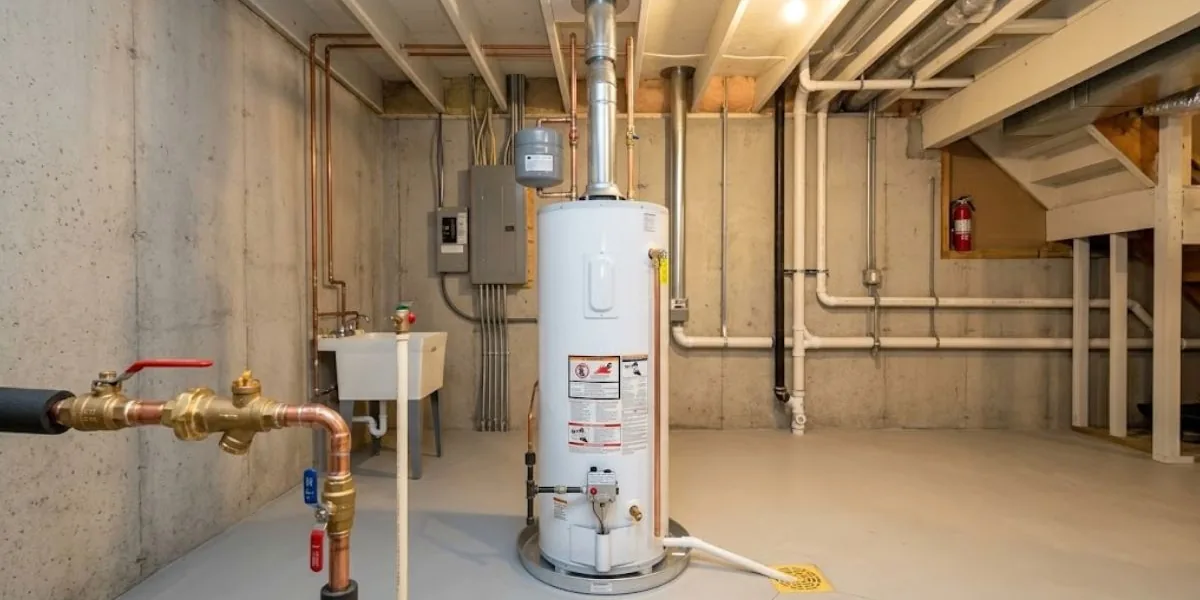
Emergency Water Heater Replacement in Mount Laurel, NJ
A failed tank does not wait for business hours, and neither do we. Call the 24/7 line and a licensed plumber can swap the unit, often the same day when one is on hand.
When the tank gives out and the floor is wet
Water heater replacement means taking out a failed tank or tankless unit and setting a new one with the water, fuel, venting and safety connections done to current practice. If yours is leaking, cold, or rumbling like a kettle, call the 24/7 line. The 24/7 line is staffed nights, weekends and holidays, and same-day appointments are available when units are on hand.
While you wait, close the cold water valve at the top of the tank and shut off its fuel. On a gas unit that is the gas control knob, and on an electric unit it is the breaker. Leave the drain valve closed and keep people and pets out of any pooled water near a plugged-in appliance.
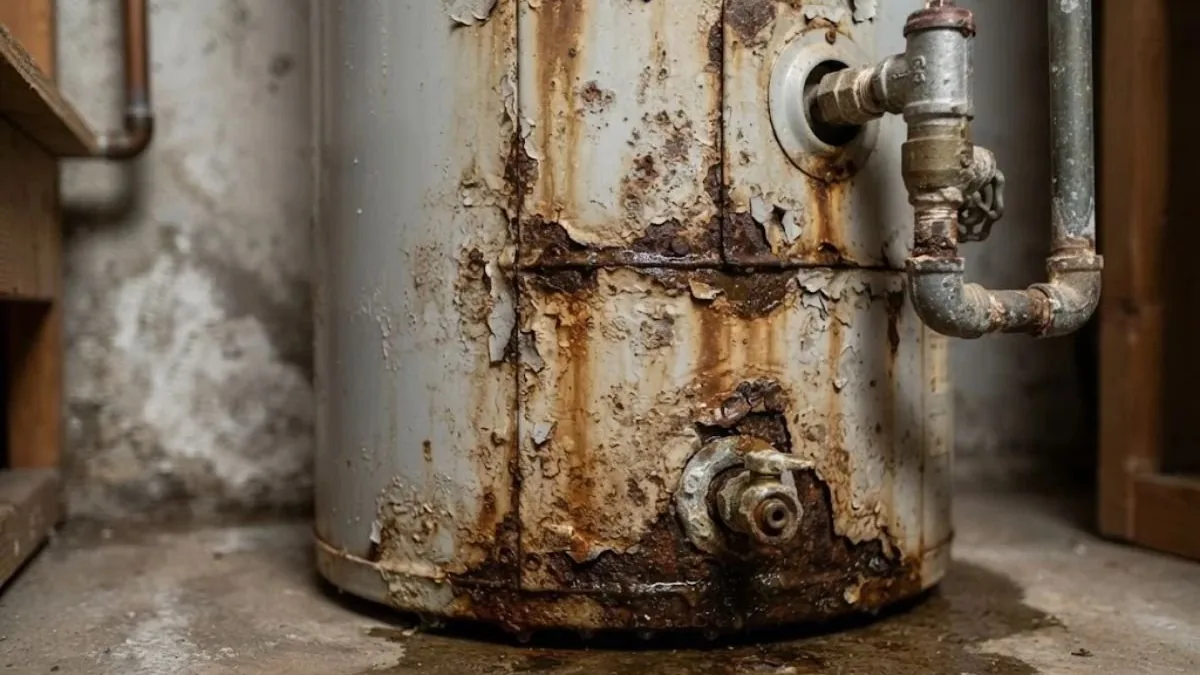
A leaking tank is a replacement, not a repair
Water that seeps from the bottom or the seam of the steel tank means the inner lining has rusted through. No patch, sealant or tightened bolt fixes that, and it will only get worse. If the water is coming from a fitting, a valve or the relief pipe instead, the tank may still be sound, and the plumber will check before recommending a new one.
Our companion page on water heater repair covers the faults that are worth fixing, such as a dead element or a pilot that will not stay lit.
Tank leaking or cold? Call the 24/7 line and ask about same-day replacement.
Call (609) 547-1417Gas, electric or heat pump for the swap
Most homeowners keep the fuel they have, because switching means new gas line, venting or a new circuit. The table shows what each choice asks of the house.
| Type | Best for | Trade-off |
|---|---|---|
| Gas tank. | Homes with a gas line and a proper flue, fast recovery. | Needs correct venting and a combustion check at every install. |
| Electric tank. | Homes without gas, simple installation. | Slower recovery, and the heating elements scale up in hard water. |
| Heat pump tank. | Lower running cost, a roomy basement or utility room. | Needs open air space, a condensate drain and usually a 240 volt circuit. |
| Tankless. | Space savings and steady hot water for a smaller household. | Higher install cost and a descaling routine, see tankless water heater service. |
Going from gas to a heat pump is a bigger project than a like for like swap, so ask for it as a planned job if the old tank is still holding water.
What the plumber does on swap day
A standard tank swap follows the same order whether it is a Saturday night or a weekday morning.
- Confirm the diagnosis. The plumber checks that the leak really is the tank and not a fitting or the relief valve line.
- Shut off and drain. Water, gas or power are isolated, and the old tank is drained to a floor drain or outside with a hose.
- Disconnect and haul out. Supply lines, flue and gas connector come off, and the old unit is carried out so the pan area can be dried and checked.
- Set and connect the new unit. New flexible connectors, a dielectric fitting where needed, a fresh relief valve and a drain pan go in, and the tank is leveled.
- Vent and test. A gas unit gets its flue checked for draft and a combustion test. An electric unit is tested for voltage at the thermostat.
- Fill, purge and set the temperature. The tank is filled with a hot tap open to purge air, then set to a safe temperature and left running while the plumber confirms no drips.
Sizing the new tank to the people in the house
Tank size is only half the story. The number that matters is the first hour rating on the yellow label, which tells you how much hot water the unit can deliver in a busy hour. A household of one or two often does fine on a 40 gallon tank, while a family of four with teenagers usually wants 50 gallons or more.
Tell the dispatcher how many people shower in the morning and whether you run a soaking tub. If your old unit always ran out, go up a size or look at a higher recovery model. If it never ran out, matching it is usually the sensible and cheaper call.
Hard water and the crust inside Mount Laurel tanks
The township's water quality summary lists 63 to 138 ppm across the supplies it names. The MUA and New Jersey American Water sit near 80 to 100 ppm. That full span is roughly 3.7 to 8.1 grains per gallon, moderately hard to hard at the high end. Over time that hardness settles as scale on electric elements and as a layer of sediment on the bottom of a gas tank. Both slow recovery and shorten the tank's life.
Most of the township's housing was built after the mid 1960s, so many heaters here are second or third replacements on the same plumbing. Ask the plumber to flush the sediment on the new tank every year or so and to check the anode rod, which sacrifices itself to protect the steel.
Relief valve, expansion tank and venting questions
Every new tank gets a temperature and pressure relief valve with a discharge pipe run to a safe spot, never capped or plugged. If your house has a check valve or pressure reducing valve on the water service, heated water has nowhere to expand, and an expansion tank takes up the extra volume. Without one, the relief valve can drip every time the burner runs.
A gas unit must vent combustion gases outdoors through a flue sized for that model. Atmospheric flues rely on natural draft, while power vent and direct vent models use a fan and plastic pipe. Permit rules vary, so ask the Mount Laurel construction office whether your swap needs one, and know that New Jersey adopts the National Standard Plumbing Code.
Water heater flooding the basement tonight
Water heaters fail at 2 a.m. as often as noon. Call the 24/7 line any night, weekend or holiday, and a dispatcher takes your address and the type of unit.
- Close the cold supply. The valve is on the pipe entering the top of the tank. Turn the handle until it stops.
- Cut the fuel. Turn the gas control to off, or switch the dedicated breaker off, before touching anything wet.
- Smell gas? Leave. Go outside, call 911 and the gas utility from outside, then call us. Do not flip switches on the way out.
- Move belongings up. Lift boxes and electronics off the floor and open a drain or run a wet vacuum if it is safe.
- Photograph the unit. Snap the rating label, the pooled water and any damage, because your insurer may ask.
If water is spreading past the utility room and you cannot find its source, see leak detection to trace the line.
What moves the price of a new water heater
Two replacements on the same street can cost very different amounts, and the unit itself is only part of it.
- Fuel and type. A heat pump or tankless model costs more to buy and set than a standard gas or electric tank.
- Size and efficiency. Bigger tanks and higher efficiency ratings raise the equipment price.
- Venting changes. A flue that no longer meets the new unit's needs, or a switch to power vent, adds parts and labor.
- Code upgrades. An expansion tank, a drain pan or a new relief valve line adds to the job.
- Access and haul-away. Attic or tight closet installs, long stair carries and disposal of the old tank take extra time.
Insurance may respond to a sudden flood from a burst tank and not to the tank itself, so photograph the wet area and the data plate before the old unit leaves.
You get a clear price before work starts, so call (609) 547-1417 for your real number once the plumber knows your unit and layout.
What to do after the new heater is in
Write the install date and the model number on the tank with a marker, and keep the paperwork where you can find it. If you ever need warranty help, the serial number and install date will be the first things asked. Set the thermostat to a temperature that is safe for children, and check the relief pipe for drips over the first few days.
If a pipe fitting nearby looks green or weepy, mention it before the plumber leaves. Older copper in the township's 1970s and 1980s homes can pinhole at the same time as the tank, and a quick look now saves a second emergency call. Our plumbing installation team handles any added shutoff valves or new runs.
Replacing a water heater in Mount Laurel, answered
Yes. The 24/7 line is answered by a dispatcher on nights, weekends and holidays, and same-day appointments are available when units are on hand. If the swap cannot finish that night, the plumber can make the area safe first.
Not when the leak is from the tank itself. Rust through the steel shell cannot be sealed. Leaks at a valve, a fitting or the relief pipe are different and often cheaper to fix, which is why the plumber looks first.
Many tanks run roughly eight to twelve years, depending on water quality, sediment and anode rod condition. Look at the serial number on the rating label to date your unit. Past ten years, a leak or a failed part usually points toward replacing it.
The plumber can explain what a swap involves, but the township office decides what needs a permit, so check before the work starts. The plumber can tell you what a given swap involves and will install to the plumbing code that New Jersey adopts.
Often yes, but it is a bigger job than a like for like swap. The unit needs open air space, a condensate drain and usually a 240 volt circuit. Schedule it as a planned water heater installation if the old tank is not leaking.
Most often thermal expansion in a closed system with nowhere for the pressure to go. An expansion tank usually cures it. A dripping valve can also mean very high water pressure or a valve that needs replacing.
Yes, we serve nearby towns, including Moorestown and Evesham, from the Mount Laurel base. Call and the dispatcher confirms your address.