
Emergency Water Line Repair in Mount Laurel, NJ
The pipe between the street and your house fails out of sight. A dispatcher takes the call day or night.
The buried pipe that feeds the whole house
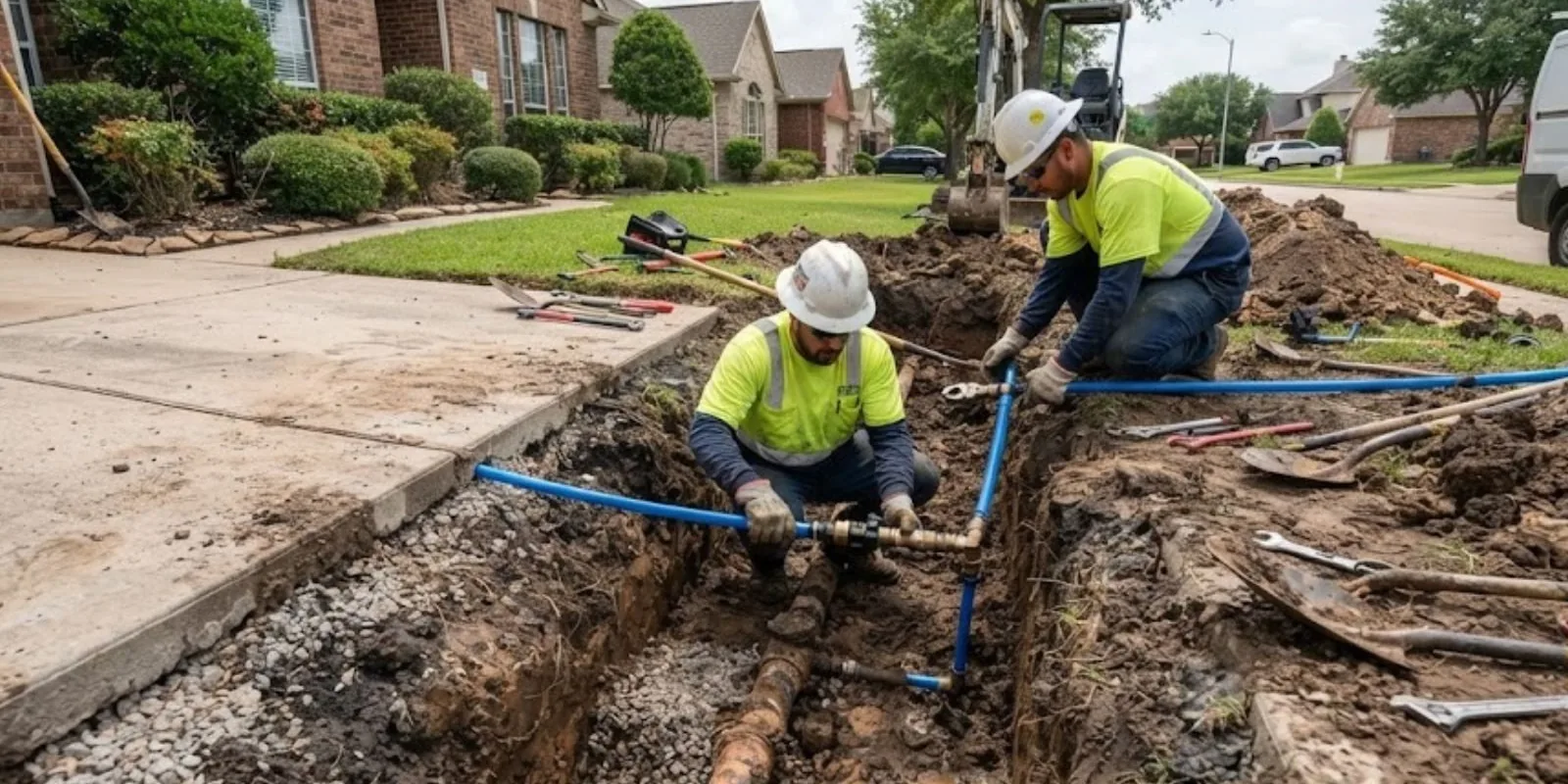
Water line repair covers the service line, the single pipe that carries water from the main under the street to your house. When it leaks or breaks, everything inside loses pressure at once, and water can surface in the yard or quietly soak the ground for weeks. If the line is spraying or the basement is wet, close the main valve and call the 24/7 line, which is staffed on nights, weekends and holidays.
How a failing service line shows itself
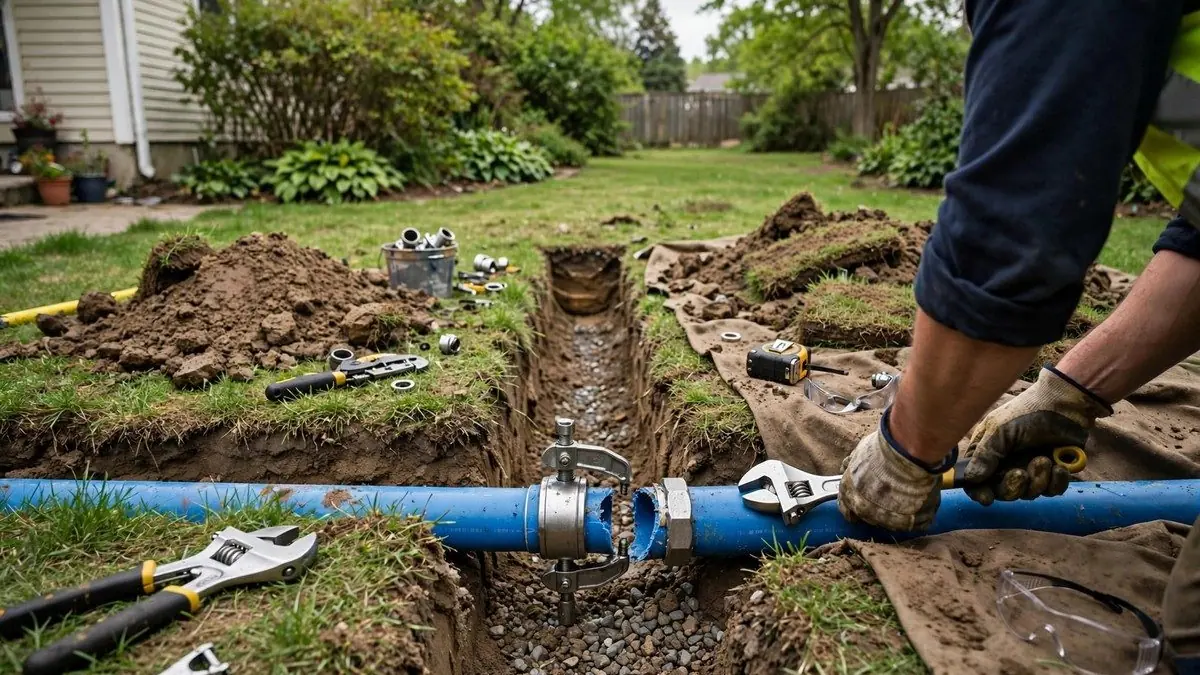
A buried leak rarely looks like a leak. Most people notice something odd first and the cause later.
- Water pressure drops at every faucet, shower and hose bib in the house.
- A damp or unusually green strip of lawn runs between the street and the foundation.
- The meter keeps turning when every fixture is closed.
- Water bills climb with no change in how the household uses water.
- Water appears at the basement wall where the line enters the house.
- Water looks cloudy or brown right after pressure changes.
- You hear a hiss near the meter or the main shutoff.
Two or three of these together point at the line rather than at a single fixture.
Meter still moving after the main is closed? Call the 24/7 line.
Call (609) 547-1417Who owns which part of the line
In general, the homeowner owns the service line from the curb stop or the meter to the house, and the utility owns the main and the connection to it. Rules differ by utility, so confirm with the one serving your address. In Mount Laurel that is the Mount Laurel Municipal Utilities Authority or, in part of the township, New Jersey American Water.
Call before you hire anyone. If the leak is on the utility side of the meter, the repair is theirs, and if it is on yours, the plumber handles it.
Proving the leak is in the line and not in the house
- Meter check. With every fixture off, a moving meter means water is leaving somewhere.
- Main valve test. Close the main at the house. If the meter keeps moving, the loss is on the street side of that valve.
- Pressure test the line. The plumber isolates the line and watches a gauge, which confirms a leak without digging.
- Locate the spot. Ground microphones and correlators find the sound of escaping water so the dig can be short.
- Call 811. Before any digging, New Jersey One Call marks buried utilities, and the plumber starts that request. It is also the law before excavation.
Open trench or trenchless: choosing the repair
| Approach | Best for | Trade-off |
|---|---|---|
| Spot repair. | One failed fitting or short break. | Leaves the rest of an old line in place. |
| Open trench replacement. | Short runs, shallow lines, accessible yards. | Digs up lawn, walks or driveway edges. |
| Pipe bursting or pulling. | Long runs where the old line is replaced along its own path. | Needs entry and exit pits and suitable soil. |
| Directional boring. | Lines under a driveway, sidewalk or landscaping. | Needs clear space for equipment. |
The right choice depends on what the camera and locator show once the line is traced. For leaks inside the house instead, see hidden leak detection.
A burst service line is flooding the yard or basement
A broken line can wash out soil, flood a basement and leave the house without water at all. The 24/7 line takes calls through nights, weekends and holidays.
- Close the main valve. Turn it clockwise at the house. If it will not turn, do not force it with a wrench, and tell the dispatcher.
- Look for the meter box shutoff. Some homes have a second valve at the meter. It may belong to the utility, so close it only if you are certain.
- Keep people away from soft ground. A washed-out hole can collapse, so mark it and keep children and pets back.
- Stay out of the basement if water is rising. Switch off power to the area only from a dry spot, and otherwise leave it to the plumber.
- Call and describe where the water shows. Give the location in the yard and whether the meter moves.
Lead service lines and what to ask about your pipe
A 2021 New Jersey law requires water systems to replace lead service lines over roughly a decade. The Mount Laurel township summary reports low lead levels overall and says lead solder was permitted in home plumbing through 1982. The practical payoff is simple, so ask the water utility what material your service line is made of before any repair starts.
If the line is lead or an old galvanized pipe, a repair is a good moment to replace the whole length instead of patching it. Houses built through the early 1980s may have solder joints inside as well, and a plumber can point them out. A plumber can only confirm the material once the line is exposed, so treat any guess about it as provisional until then.
What decides the cost of a buried line job
No two yards are alike, which is why two service line jobs on the same street can differ widely.
- Length and depth. A longer, deeper line takes more digging or more boring time.
- What is on top. Lawn is easy to restore, but driveways, patios and sidewalks add cutting and repair.
- Method. Trenchless work needs specialized equipment, while open trench needs more restoration.
- Pipe material. Copper, PEX and HDPE each have their own material and fitting costs.
- Utility connection work. Meter or curb stop work belongs to the utility and may involve scheduling on their side.
Homeowners insurance policies often treat sudden and accidental damage differently from gradual leaks or wear, and some policies exclude buried lines unless an add-on is purchased. Read your policy or ask your agent before assuming.
The plumber states the price for the trench and the pipe before digging begins. Call (609) 547-1417 to start with a description of where the water is showing.
Before the plumber arrives
Find your meter and note the reading, and clear a path to the main valve. If you suspect the line passes under a driveway or a fence, say so. If the damage seems to start inside the house, a burst pipe repair may be needed first. If you also see signs of old plumbing throughout the house, ask about repiping at the same time. Homeowners near Cherry Hill and the rest of the area get the same dispatch.
Service line questions homeowners ask
Yes. The 24/7 line is staffed on nights, weekends and holidays. Close the main valve at the house and call, and same-day appointments are offered when available.
The homeowner generally owns the pipe from the curb stop or meter to the house, but confirm with the utility serving your address. That is the Mount Laurel MUA or New Jersey American Water, depending on where you live.
Ask your water utility what material the line is. A 2021 New Jersey law requires systems to replace lead lines over roughly a decade, so the utility's lead line work is a good reason to ask about yours.
Digging into a buried gas, electric or communications line is dangerous, and 811 gets the lines marked. Call 811 before digging. It is a free call and should happen before any excavation.
Often, yes. Pipe bursting and boring need only entry and exit pits, but they depend on soil and the old line's condition. A plumber tells you which method fits.
Close the main valve and watch the meter. If it keeps moving, the leak is outside. If it stops, the leak is somewhere inside. A replacement service line follows the National Standard Plumbing Code that New Jersey adopts, and permit rules vary, so ask the Mount Laurel construction office.