
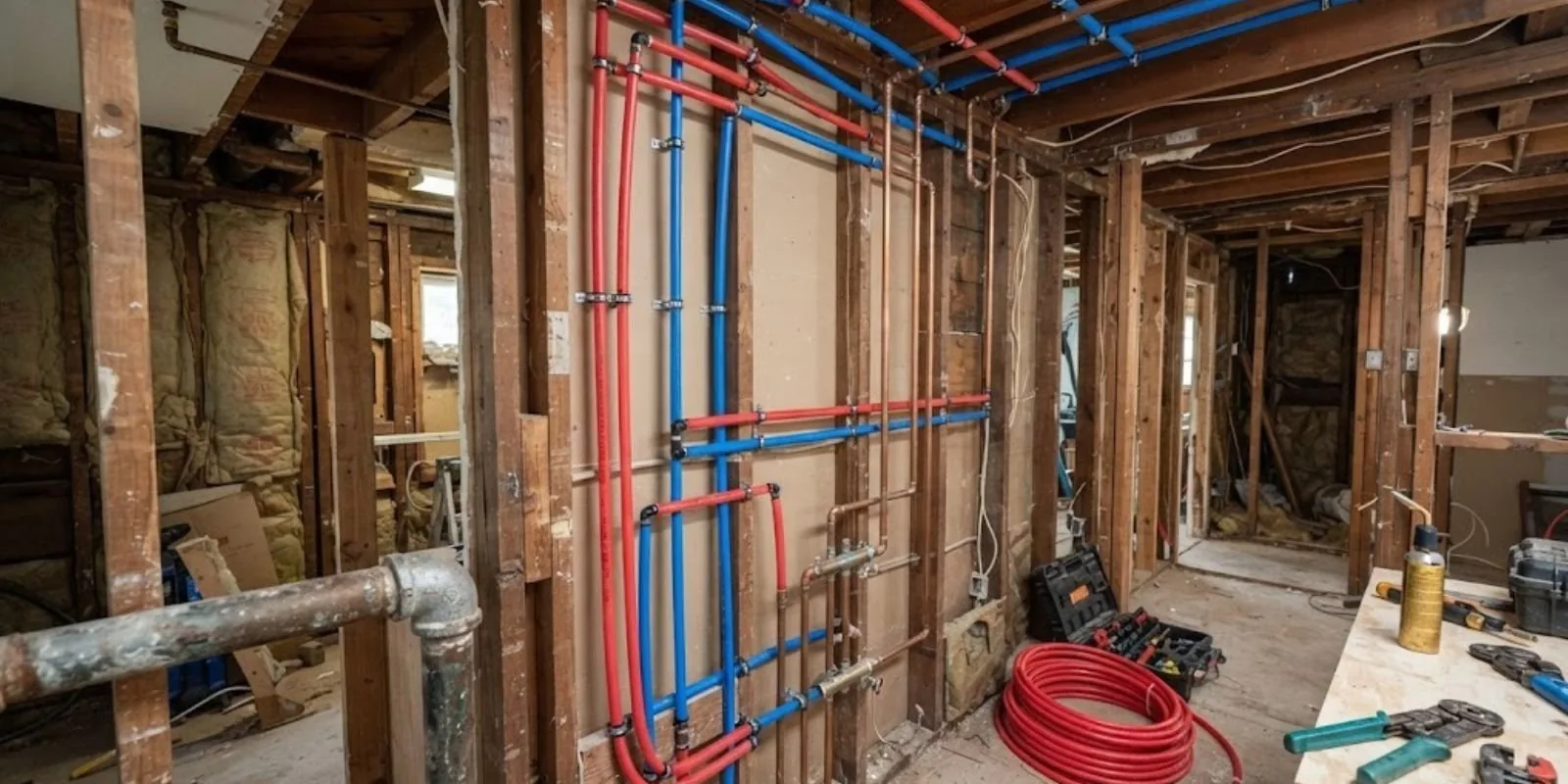
Repiping in Mount Laurel, NJ
Repiping replaces the water supply pipes inside a house. It is a planned job, with a clear price before work starts.
When patching stops making sense
Repiping means replacing the supply pipes that carry water to every faucet, fixture and appliance, usually with new copper or PEX. It is a bigger step than fixing one leak, so it makes sense only when the pipes themselves are failing and repairs keep repeating. A plumber can tell you honestly whether a repair or a repipe fits your house.
If water is actively leaking, treat it as an emergency, close the main valve and call the 24/7 line first. The repipe conversation can wait until the water is stopped.
Rusty water, weak pressure and repeat leaks
Homeowners usually arrive at this decision through a pattern, not a single event.
Brown or orange water.
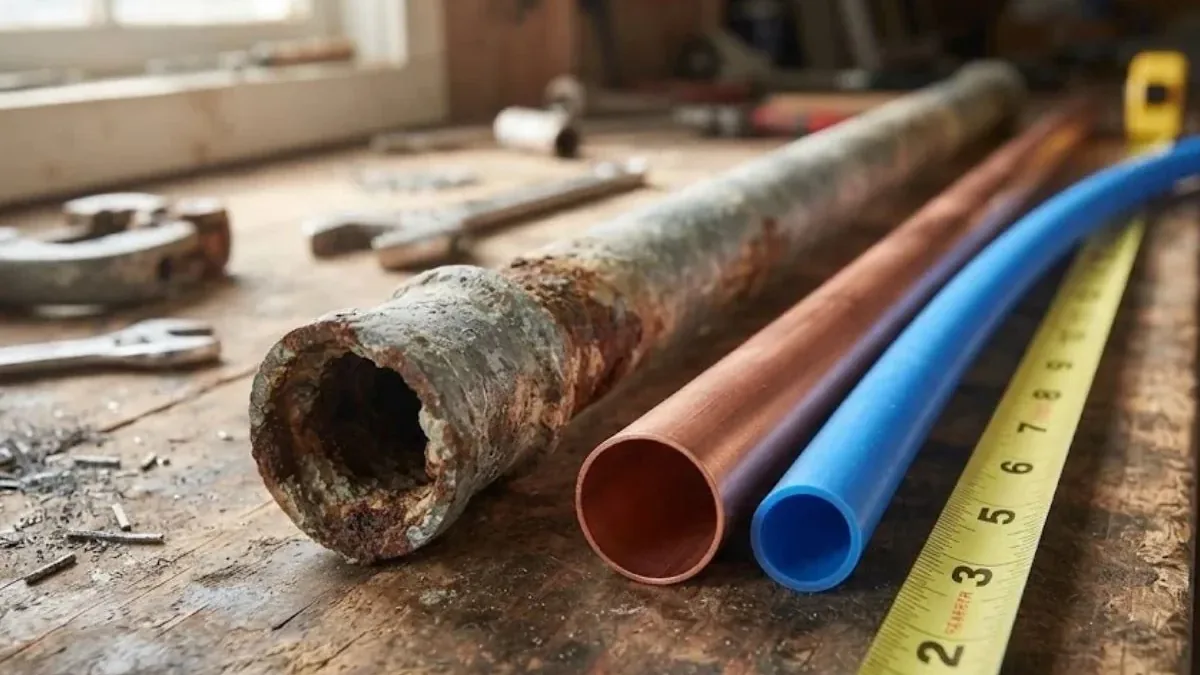
Rust-colored water from several taps, especially after a period of no use, often means iron pipe corroding from the inside.
Pinhole leaks that keep coming.
One pinhole is a repair. A second and third in different rooms say the metal is thinning everywhere.
Pressure that fades.
Mineral buildup and corrosion narrow old galvanized pipe, so showers weaken even when the street pressure is fine.
A chain of repair visits.
When the same house keeps needing plumbing patches, the cost of each repair adds up to a significant share of a new system.
Metal taste or staining.
Blue-green stains around fixtures point to copper wear, and a metallic taste may as well.
Rusty water or repeat leaks? Call and talk through repair versus repipe.
Call (609) 547-1417Which old pipes cause trouble
Galvanized steel was common in older houses, and it rusts from the inside, closing the pipe and then leaking. Polybutylene, a gray plastic used in some homes in the 1980s and early 1990s, has fittings that can fail without warning. Copper lasts a long time, but water chemistry and age can cause pinholes. CPVC can turn brittle.
Many people assume a house built after the mid 1960s must have modern plumbing. Most Mount Laurel housing does date from that era, and copper is the usual supply material. But additions, older sections and renovation patches can still hide galvanized steel, and homes from the 1980s can have polybutylene, so the era alone proves nothing. A plumber looking at your basement can read the pipe and tell you which one you have.
PEX or copper: how the choice plays out
| Factor | PEX | Copper |
|---|---|---|
| Installation. | Flexible tubing snakes through walls with fewer openings. | Rigid pipe needs more cuts and joints. |
| Freeze tolerance. | Expands somewhat before it splits. | Splits when ice forms. |
| Lifespan. | Long, with a shorter track record than copper. | Decades, with a long record. |
| Water chemistry. | Not affected by acidic or aggressive water. | Can pit in some water conditions. |
| Sunlight and heat. | Must be protected from sunlight and kept clear of flue and hot sources. | Handles heat and light without issues. |
Ask the Mount Laurel construction office which materials are accepted for your job, and ask which the plumber recommends for your house and why.
How a repipe keeps water on most of the day
A crew can work in stages so the house is not dry for long.
- Survey and plan. The plumber maps the existing runs and picks the shortest paths for new pipe.
- Rough in the new system. New lines go in beside the old ones, usually from the basement or crawlspace up through the walls.
- Open only what is needed. Small access holes in drywall let the plumber fish PEX through walls, so most of the wall stays closed.
- Switch over. The water is shut off briefly while the house is tied into the new piping, then turned back on.
- Pressure test and inspect. The system holds test pressure while the work is checked, and the construction office can tell you how inspections apply.
- Patch and finish. Drywall patching and painting are often a separate trade and should be agreed on in advance.
Repipe the whole house or just part of it
A partial repipe, such as one bathroom group or the run that keeps leaking, is often the smarter choice when the rest of the system is in good shape. A full repipe makes sense when the material itself is failing everywhere, as with galvanized steel or polybutylene.
A plumber who cannot see the pipes inside the walls should say so, and the honest answer may take a camera or a test cut to learn.
What a repipe quote should spell out
A written quote should name the pipe, the scope and the wall repair, so you can compare apples to apples.
- House size and layout. More bathrooms, floors and fixtures mean more pipe and more connections.
- Access. Open basements and crawlspaces are quicker than finished ceilings and slab homes.
- Material. PEX and copper differ in material cost and labor time.
- Wall and floor repair. Drywall and paint can be included, excluded or left to another trade, and the quote should say which.
- Permits and inspection. Ask the Mount Laurel construction office what applies, since rules vary.
On insurance, homeowners policies often treat sudden and accidental damage differently from gradual leaks or wear, and pipes that wear out on schedule are rarely covered. Read your policy or ask your agent before assuming.
You get a clear price before work starts. Call (609) 547-1417 to start the walkthrough.
Related work that often rides along
A repipe is a good time to add shutoff valves, replace fixture supply lines and check the water heater connections. If the heater is old, ask about replacing the water heater at the same visit. If a pipe bursts before the repipe is scheduled, a burst pipe repair stops the damage, and the 24/7 emergency line covers nights, weekends and holidays.
For any leak you cannot place, a leak search helps first, and new bathrooms or kitchens fall under plumbing installation. Neighbors in Medford and the surrounding towns use the same service.
Repiping questions homeowners ask
Look at exposed pipe in the basement. Galvanized is dull gray, magnets stick to it and it often shows rust at the joints. Copper is brown or green, and plastic pipe comes in white, gray or colors.
A repipe is staged so the house usually has water for part of each day, but the plumber should tell you the plan in advance. Ask how long the main will be closed on each day.
Many plumbers advise replacing it, since the fittings can degrade from the inside. Even if yours is not leaking, ask for an opinion based on what is in your house.
Yes, when a single run or fixture fails and the rest of the pipe is sound. A plumber checks a few spots and tells you where the wear is.
New piping is a selling point, and some insurers ask about pipe material. Ask your agent, since policies and underwriting differ.
Usually not. PEX can be fished through small openings, and the plumber should explain where the holes will go and who patches them. Piping and fittings for a repipe are chosen to meet the National Standard Plumbing Code that New Jersey adopts, so ask the plumber to name the material and the code it satisfies.