
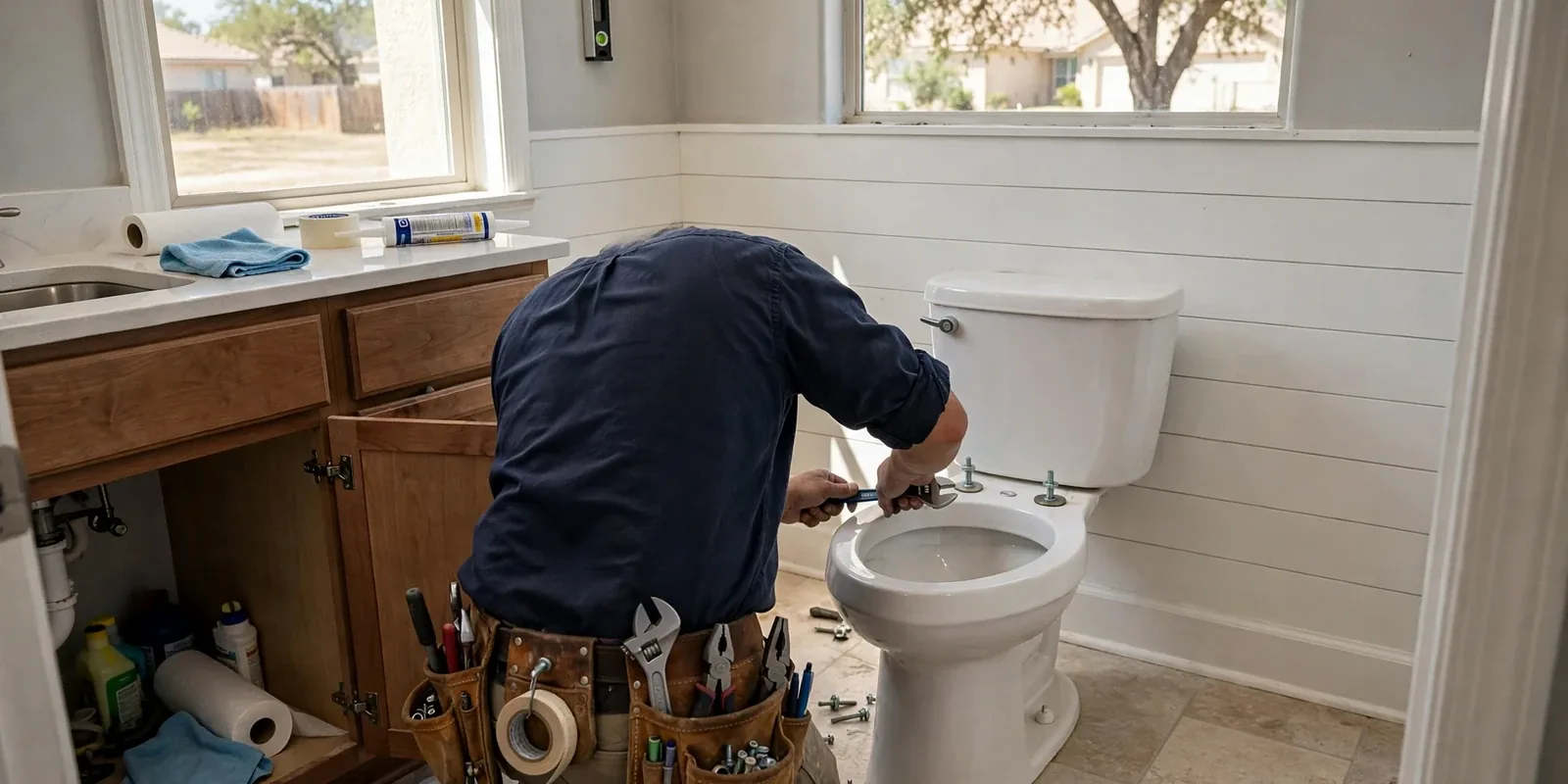
Emergency Toilet Repair in Mount Laurel, NJ
A toilet that will not stop running, leaks at the floor or climbs toward the rim needs attention fast. The 24/7 line is staffed day and night.
A toilet that fails at the worst hour
Toilet repair means fixing the parts that fill, flush, seal and drain a toilet, from the flapper and fill valve inside the tank to the wax ring and flange under the bowl. When a bowl is rising or water is reaching the floor, the 24/7 line is open on nights, weekends and holidays. The line is staffed, and a licensed plumber can be sent.
While you wait, shut the water off at the small valve on the wall behind the bowl, turning it clockwise until it stops. Lift the tank lid and set the float or flapper so no more water enters. Those two moves stop most overflows before they spread.
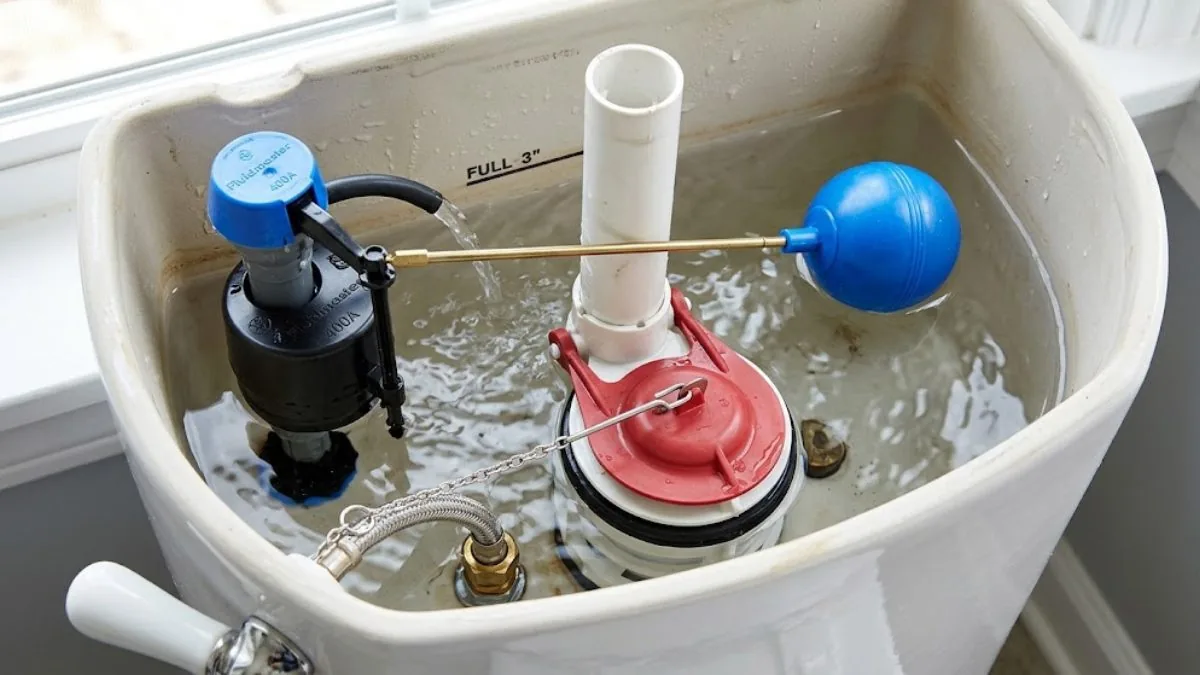
Match the symptom to the likely culprit
Most toilet trouble falls into a few patterns. Find yours before you reach for a tool.
- Water trickles into the bowl all day, which usually points to a worn flapper that no longer seals.
- The tank hisses or refills again and again, which suggests a tired fill valve or a float set too high.
- Water seeps from the base after a flush, a classic sign of a failed wax ring or a loose closet bolt.
- The bowl rocks when you sit, which means the flange or the bolts are not holding it steady.
- The flush is weak and slow, often from clogged rim jets or a partial clog deeper in the trap.
- The handle feels loose or limp, because the chain or the lever arm has slipped or snapped.
- Water climbs and does not fall, which is a full clog and the moment to stop flushing.
If two or three of these show up together, the toilet is usually worn out as a whole rather than failing in one spot.
Bowl rising toward the rim or water on the floor
A rising bowl is a short window. Act in the next minute and you can usually keep the mess off the tile and out of the ceiling below.
- Do not flush again. A second flush adds more water to a bowl that already cannot drain.
- Close the supply valve. Turn the oval handle on the wall clockwise. If it will not move, do not force it, since old valves can snap.
- Lift the flapper. Remove the tank lid and press the rubber flapper down into its seat, or raise the float so the tank stops refilling.
- Put towels around the base. Wet flooring and subfloor are the costly part, so contain the water first.
- Call the 24/7 line. If the valve will not close or water keeps coming, call (609) 547-1417 and say so.
Bowl water that looks gray or smells like sewage points to a drain problem, a problem past the toilet itself. In that case also see drain cleaning for what a deeper line problem involves.
Bowl rising or water at the base? Close the wall valve, then call the 24/7 line.
Call (609) 547-1417Clearing a clogged toilet yourself
A plain clog is one of the few plumbing jobs a homeowner can often finish alone. Try this order before you call.
- Use a flange plunger. The cup with the extra rubber sleeve seats into the drain opening, and ten or so steady pushes beat quick jabs.
- Move to a closet auger. This short cable with a curved guide feeds through the trap without scratching the porcelain.
- Crank slowly and retrieve. Turn the handle as you push, then pull the cable back and look for what it caught.
- Test with a small flush. Pour a bucket of water into the bowl first, because a full tank flush on a half-cleared drain can overflow.
What not to pour or push down a stopped toilet
Skip drain-opening chemicals. They sit in the bowl, can burn skin when a plunger splashes them, and make the next plumber's work riskier. Do not push a wire hanger or a stiff rod into the trap either, since it scratches porcelain and can lodge a toy or wipe further in. If the auger fails twice, or a second toilet gurgles when you flush the first, the blockage is past the toilet and needs a cable machine.
Repair or replace, part by part
A toilet is cheap to rebuild and expensive to ignore, but not every one is worth saving.
| Problem | Best fix | Trade-off |
|---|---|---|
| Constant running. | New flapper or fill valve. | A quick, low-effort part swap that rarely needs the bowl lifted. |
| Leak at the base. | New wax ring, bolts and a check of the flange. | The toilet must come up, and a cracked flange adds repair work. |
| Rocking bowl. | Re-seat, shim or fix the flange. | Shims are a stopgap if the flange itself is broken. |
| Repeated clogs. | Auger, then camera if it returns. | A clog that keeps coming back can sit in the line, not the bowl. |
| Cracked porcelain or tank. | Replace the toilet. | Cracks cannot be sealed for good, so repair is wasted effort. |
When the main drain is the cause, see sewer line cleaning before buying a new bowl.
Why the fill valve in a Mount Laurel tank wears out
The township's water quality summary lists 63 to 138 ppm of total hardness across the supplies it names. The MUA and New Jersey American Water sit near 80 to 100 ppm, which is moderately hard. Hard water leaves crusty mineral scale on the moving parts of a fill valve and on the flapper seat, so the seal stops closing cleanly. Swapping those parts every several years keeps a running toilet from wasting water.
Most of the township's housing was built after the mid 1960s, so many bathrooms have original toilets with old brass or chrome supply lines. A supply line that is decades old can crack at the nut without warning. Replacing a braided line while the toilet is already being repaired costs little extra and removes a common source of a sudden floor leak,.
Wax rings, flanges and the base of the bowl
A wax ring is a soft gasket between the toilet outlet and the drain flange in the floor. It seals sewer gas and water, and it fails when the toilet rocks or the floor softens. If water has been leaking, the plumber checks the subfloor for rot before setting the bowl back, because a new ring on a spongy floor will fail again.
The flange itself can crack or sit too low after a flooring change. Repair rings and stainless flange kits fix many of these without opening the floor. A broken cast iron flange or a rotted floor is a bigger repair, and we cannot know which it is until the toilet is up.
Fill valves, flappers and when a new toilet wins
A fill valve and flapper cost little and fit most tanks. If the tank is cracked, the bowl is chipped through the glaze, or the unit uses far more water per flush than a modern one, replacement is the honest answer. Newer toilets generally flush with less water than ones built decades ago, which helps a household that runs high bills in summer.
Compare the repair against the age and condition of the whole fixture. For a bathroom remodel or moving a toilet, see plumbing installation, which covers new fixtures and rough-in.
What shapes the price of a toilet job
A tank part swap and a full lift-and-reset are very different jobs, so the price follows the cause. A plumber can usually tell you which category you are in after a short look.
- Which part failed. A flapper or fill valve is the lightest job, while a wax ring and flange repair takes longer.
- Condition of the floor. Soft or stained subfloor around the base adds work before the bowl can be reset.
- Repair or full replacement. A new toilet adds the fixture, the supply line and disposal of the old bowl.
- Clog depth. A plunger fix is short, while a clog that needs a cable machine or a camera takes more time.
- After-hours timing. A dispatcher gives the price before work starts, whether the toilet fails at noon or on a holiday night.
Your insurance policy may treat sudden and accidental damage differently from gradual leaks or wear, so read it or ask your agent before assuming this is covered.
Describe the toilet and the leak when you call (609) 547-1417, and the dispatcher can tell you what to expect.
Finding a leak that is not the toilet
Sometimes the water on the floor is not from the bowl at all. A weeping supply connection, a sweating tank in humid weather or a slow drain leak below can all look the same. Dropping a few drops of food coloring in the tank and waiting a while without flushing shows whether the flapper is the leak.
If the dye stays in the tank but the floor stays wet, the water is coming from a joint. For a hidden source, leak detection uses moisture meters and listening gear to trace it without opening walls.
Toilet questions homeowners ask before they call
Yes. The 24/7 line is staffed by a dispatcher on nights, weekends and holidays, and a licensed plumber can be sent when a toilet is overflowing or leaking. Call (609) 547-1417 and tell them whether the water is still running.
Usually the flapper is not sealing or the fill valve is not shutting off. Mineral scale from hard water is a frequent reason in this area. Both parts are inexpensive and quick to swap.
It is not an immediate hazard, but the movement breaks the wax ring and lets water seep into the floor over time. Stop using it if you notice damp tile or a smell. A reset with a new ring and a flange check usually fixes it.
It is better not to. The chemicals can splash back and may not reach a clog that sits in the trap. A flange plunger and a closet auger are safer and work on most clogs.
Repair when the porcelain is sound and only internal parts are worn. Replace when the tank or bowl is cracked, the flush is weak despite new parts or leaks keep returning. A plumber can compare both for you on site.
When several fixtures back up, or the toilet gurgles when you run a sink, the blockage is likely in the main line. That is a job for drain cleaning with a cable machine, not a plunger. Replacing a toilet or flange follows the National Standard Plumbing Code that New Jersey adopts, including flange height and venting, so a clean fit matters.