
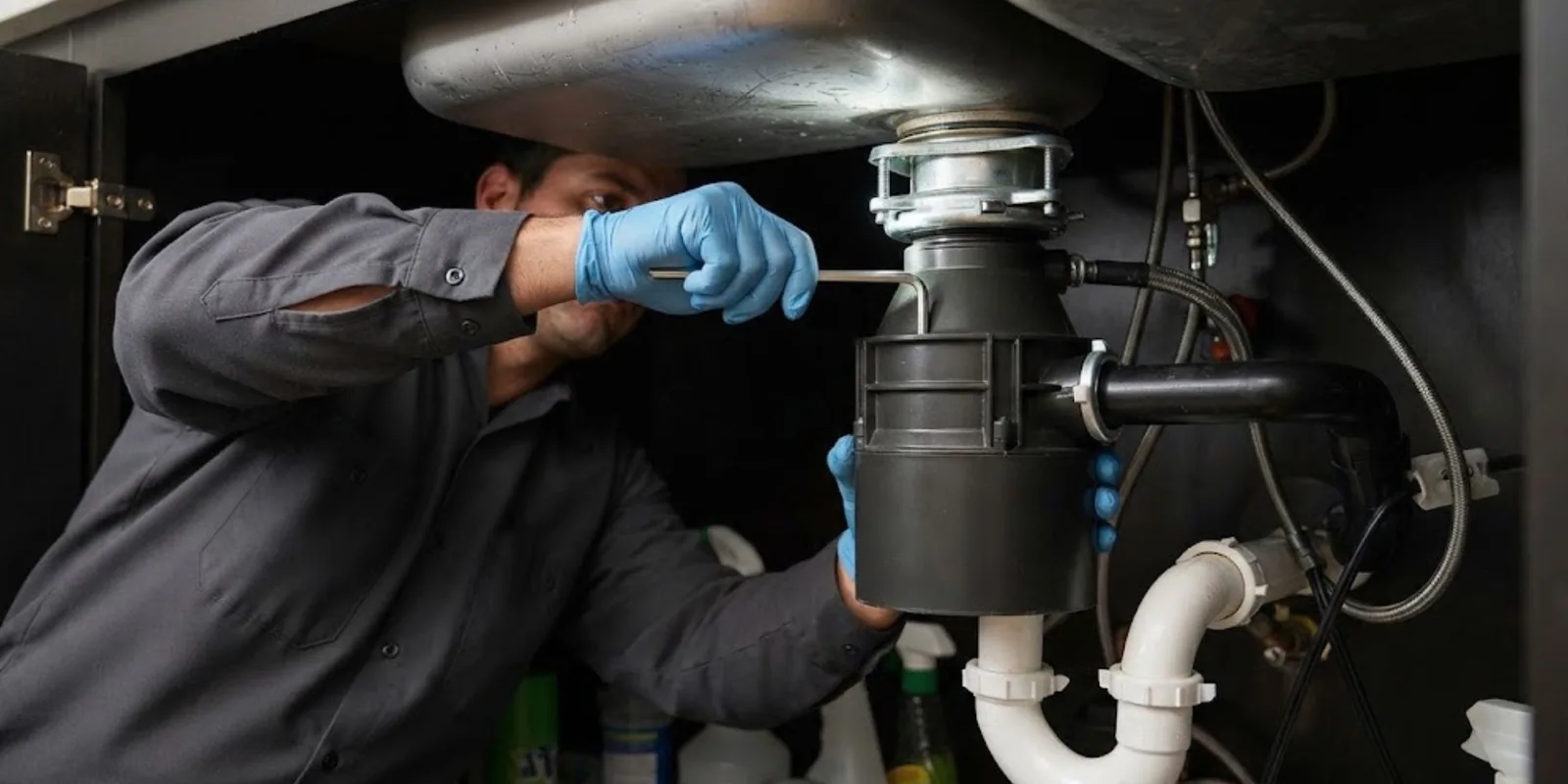
Emergency Garbage Disposal Repair in Mount Laurel, NJ
A disposal that hums but will not spin, or leaks under the sink, can stop a kitchen cold. We repair most, and install a replacement when that is the better call.
Garbage disposal repair starts with the power off
Garbage disposal repair means freeing a jammed grinder, resetting an overloaded motor, sealing a leak or swapping in a new unit. The disposal sits under the sink with a spinning plate driven by an electric motor, so power comes first. Switch it off at the breaker, not just the wall switch, before you look inside.
The 24/7 line is staffed on nights, weekends and holidays when a kitchen sink floods or a unit is leaking onto the cabinet floor. Call (609) 547-1417 and the plumber is sent.
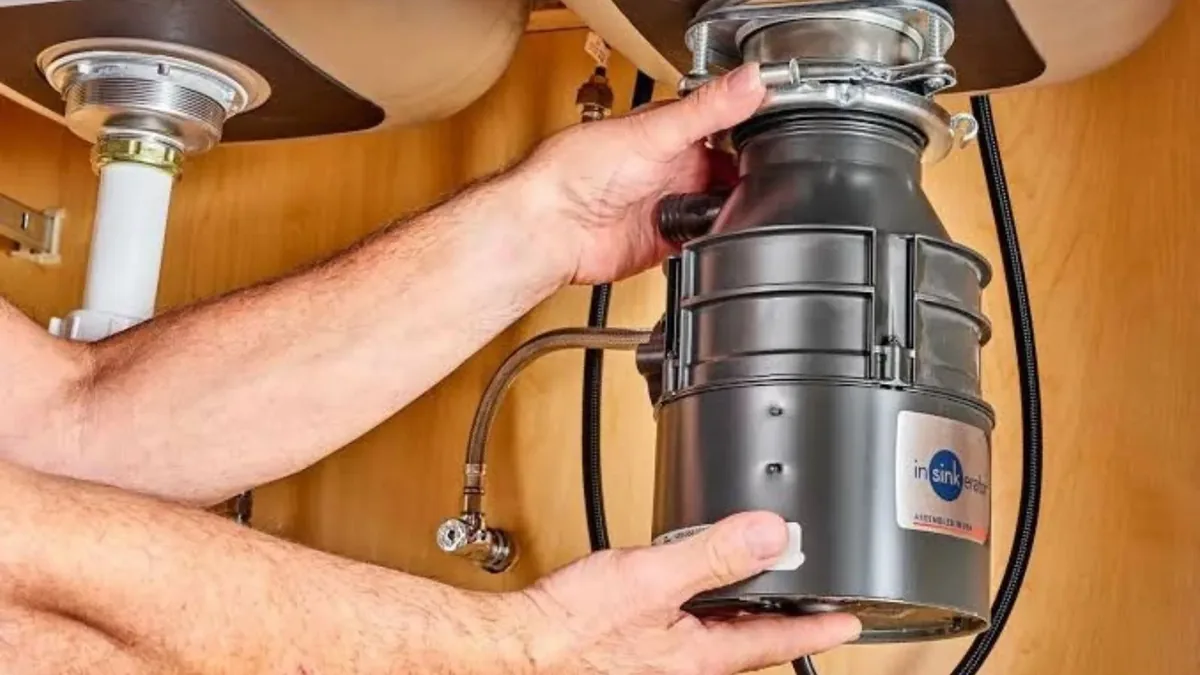
Never put a hand in the unit
Even with the switch off, keep fingers out of the chamber. Use tongs or pliers to lift out a spoon or a bottle cap you can see. The safe order is breaker off, flashlight on, then tools, never a bare hand. If you cannot see the problem, stop and call.
Humming but not spinning
A steady hum with no rotation usually means a jam. This is the home fix many people can do safely once the power is off.
- Kill the breaker. Confirm the unit is dead by flipping the wall switch and hearing nothing.
- Find the hex socket. Look at the center of the underside of the disposal for a small socket the size of an Allen key.
- Work the wrench back and forth. A hex key turns the plate by hand, and rocking it breaks a stuck grind free.
- Remove what jammed it. Look down the drain with a light and pull out any object with tongs.
- Press the red reset. Wait a few minutes, then push the small red button on the bottom, restore power and try with water running.
Disposal leaking or jammed? Power off at the breaker, then call the 24/7 line.
Call (609) 547-1417Where the leak is coming from
A wet cabinet could be one of three joints, and the location tells you what is needed.
| Leak location | Likely cause | Typical remedy |
|---|---|---|
| Top, at the sink flange. | Dried plumber's putty or a loose mounting ring. | Remove, reseal and retighten the ring. |
| Side, at the dishwasher hose. | A loose clamp or cracked drain hose. | Tighten or replace the hose and clamp. |
| Bottom or body of the unit. | A cracked housing or failed internal seal. | Replace the disposal, since the body cannot be patched. |
| Drain outlet to the trap. | A worn gasket or loose waste pipe. | Replace the gasket and refit the connection. |
Run a dry paper towel around each joint after a short test with water to see which one is wet.
Disposal flooding the cabinet right now
A running leak or any smell of burning should end the experiment. The 24/7 line is open at night and on weekends and holidays.
- Cut power at the breaker. Never stand in water while reaching for a switch, and if the floor is wet, leave the breaker alone and call.
- Close the supply stops. Turn both small valves under the sink clockwise to stop the faucet from feeding the leak.
- Empty the cabinet. Move cleaners out and put a bucket under the trap to catch drips.
- Do not run the dishwasher. Its drain shares the disposal inlet and will push more water out.
- Call (609) 547-1417. Describe where water shows up and whether the unit makes any noise.
Repair or replace the unit
Repair is the right call when a jam, a reset or a loose connection is the whole story. Replace the disposal when the body is cracked, the bearings howl, the motor trips again and again or the unit is old enough that parts and labor cost more than a new one. A cracked housing cannot be repaired in the field.
Many kitchens in houses built from the late 1960s through the 1990s already have a disposal that has run for decades. At that age the grind chamber is worn and the seals are tired, so a replacement often lasts longer than another repair. If you also have slow kitchen drains, see drain cleaning before blaming the new unit.
Installing a new disposal
This page covers repair and installation, so here is how the install goes.
Pick the horsepower
A half horsepower unit handles light use, while three quarters or one horsepower grinds tougher scraps with less jamming. A larger household benefits from the stronger motor.
Remove the old unit
The plumber disconnects power, the drain and the dishwasher hose, then unmounts the old flange.
Seal and mount the new one
Fresh putty goes under the flange, and the mounting ring locks the new unit to the sink.
Reconnect and test
Wiring or the plug, drain, and dishwasher knockout are completed, then water is run and every joint is checked.
What should never go down the disposal
Most service calls trace back to a short list of items.
- Grease, fat and oil, which cool in the trap and coat the pipe.
- Coffee grounds in large amounts, since they pack into a paste.
- Fibrous scraps like celery, corn husks and artichoke leaves.
- Rice, pasta and potato peels, which swell into a gluey plug.
- Bones, fruit pits and shells that dull or jam the grinder.
- Glass, metal, plastic and anything that is not food.
Run cold water before, during and for a short while after grinding to flush the waste past the trap.
What moves the price of a disposal job
A reset is a short visit and a new installation takes longer. The cause drives the price more than the brand does.
- Jam, leak or dead motor. Freeing a jam is the lightest job, and a dead motor usually points to replacement.
- Unit size and quality. A higher horsepower unit with better insulation costs more than a basic one.
- Existing wiring and mounting. A plug or a hardwired box, and a standard mounting ring, make installs faster.
- Drain or trap condition. Corroded drain pipe under the sink may need new fittings while the unit is out.
- Timing of the call. Dispatch on nights, weekends and holidays is available, and the hour can affect price.
Your insurance policy may treat sudden and accidental damage differently from gradual leaks or wear, so read it or ask your agent before assuming this is covered.
Call (609) 547-1417 and say whether the unit hums, jams or leaks, and the dispatcher can plan the visit.
If the kitchen sink is clogged, not the disposal
A sink that fills with gray water while the disposal runs freely points to a blockage downstream. A cable machine clears the trap arm and the branch line, and a camera shows how far the grease has built up. See sewer line cleaning if every drain in the house is slow, because that means the main line.
If you are remodeling the kitchen and moving the sink, the disposal and dishwasher hookups belong in the same plan. Read about plumbing installation for how that is sequenced.
Disposal questions that come up before a visit
Yes. Someone answers the 24/7 line on nights, weekends and holidays, and a licensed plumber can come for a disposal that is leaking or has flooded the sink cabinet. Call (609) 547-1417 and shut off the breaker first.
The grinder plate is jammed. With the breaker off, turn the hex socket on the underside back and forth, remove the object, then press the red reset button. If it hums again, the motor or the plate needs a plumber.
No. Even with the power off, use tongs or pliers. Switch the breaker off before you reach near the opening, and never trust the wall switch alone.
Replace it when the body leaks, the motor trips repeatedly or the unit is old enough that parts cost more than a new one. A plumber can tell you which side of that line you are on.
A half horsepower unit suits light use, while three quarters to one horsepower copes better with big families and tougher scraps. Higher horsepower usually grinds finer and jams less.
It can soak the cabinet fast, so run the dishwasher only after it is fixed. The cause is usually a clamp or a cracked hose, which is a quick repair. See leak detection if the cabinet stays wet.