
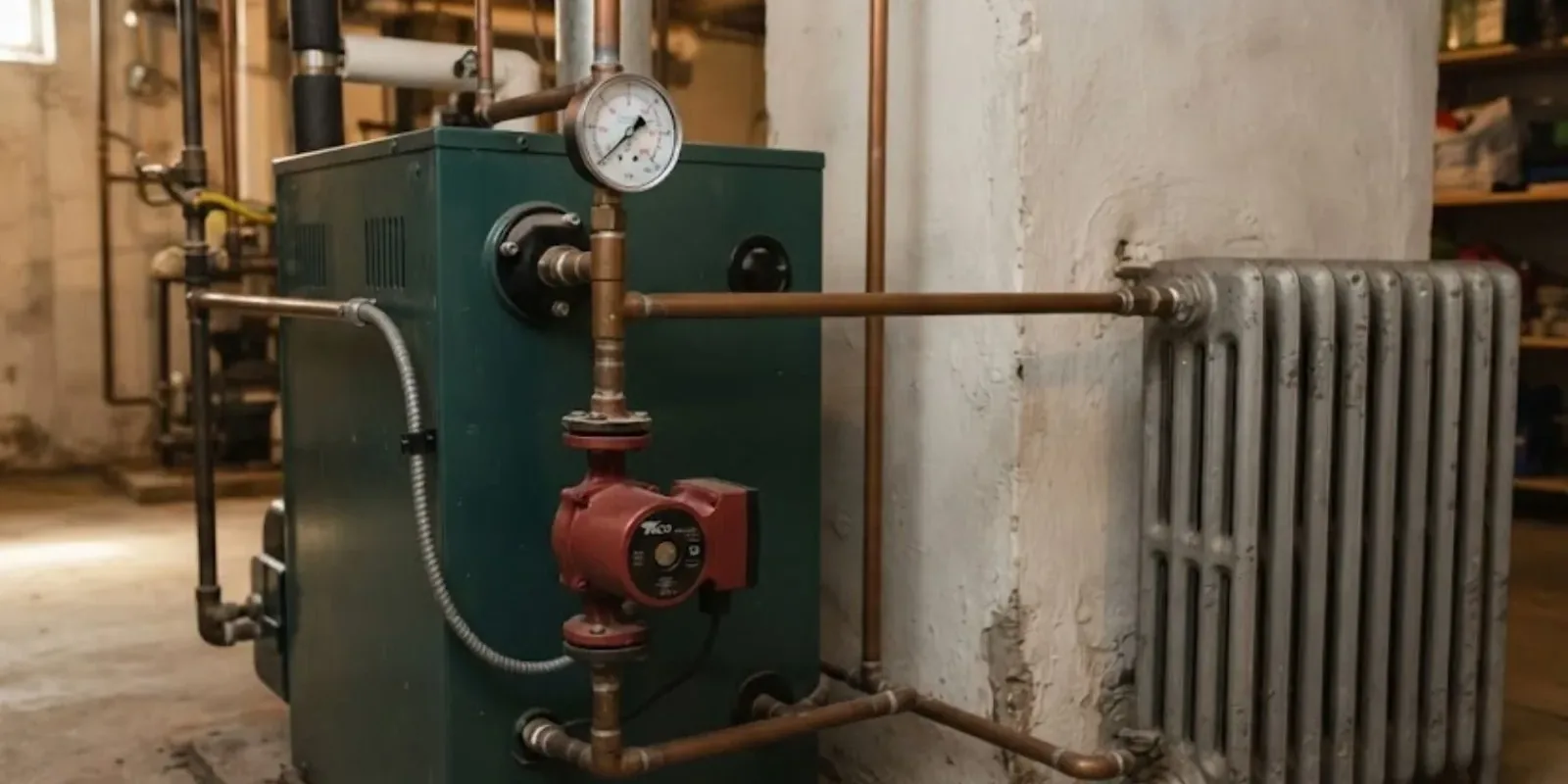
Emergency Boiler Repair in Mount Laurel, NJ
When the house goes cold in January, waiting until Monday is not an option. Call the 24/7 line and a licensed plumber will take it from there.
The house is getting colder and the boiler is quiet
Boiler repair means finding why a boiler stopped heating, leaked or started acting strangely, then fixing the failed part. The 24/7 line is staffed on winter nights, weekends and holidays, so a no-heat call never has to wait for morning. Before you phone, note whether you hear the boiler trying to run and whether any water is on the floor.
While you wait, set the thermostat to heat, check that the boiler has power and close doors to keep warmth in one room. A space heater is a fire risk if left unattended, so use one only with care.
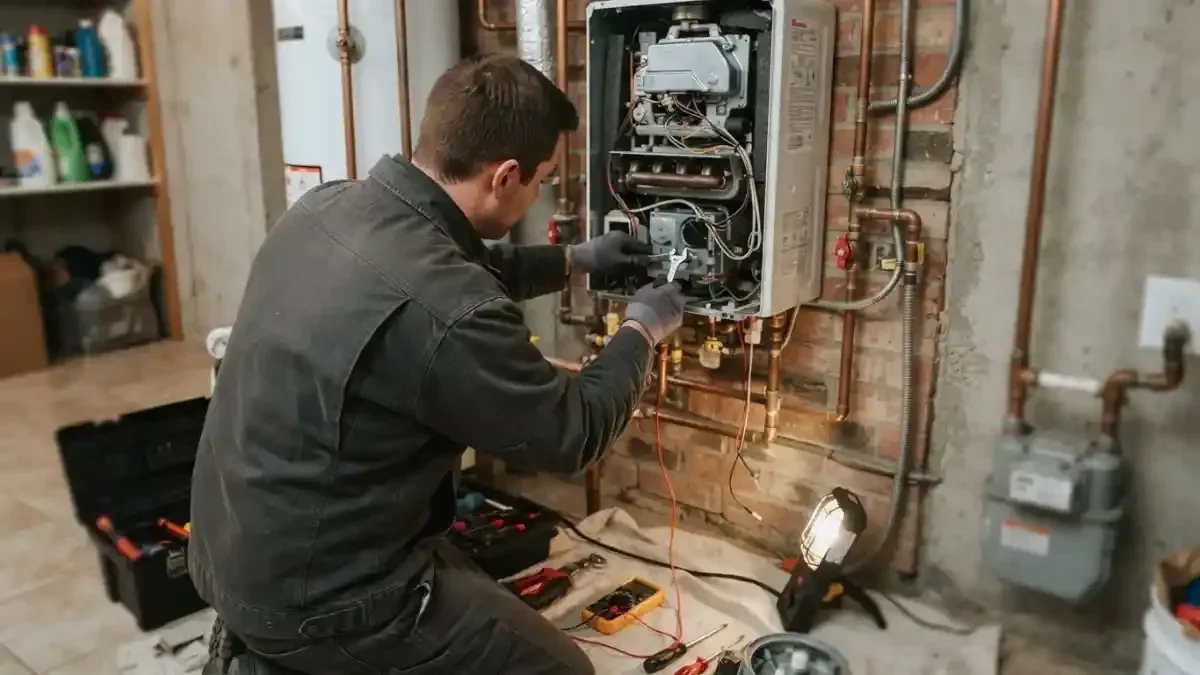
Carbon monoxide and gas come first
If a carbon monoxide alarm sounds, get everyone outside into fresh air and call 911. Do not go back in to look at the boiler. If you smell gas, leave the building, call 911 and the gas utility from outside, and only then call us.
Headache, nausea and dizziness that ease when you leave the house can signal carbon monoxide. Never run a gas boiler that smells of fumes or shows black soot around the cover.
No heat, leaks and other things the boiler is telling you
These are the most common reasons for a call.
- Radiators or baseboards stay cold while the boiler runs.
- The boiler lights, shuts off quickly and lights again, which is short cycling.
- Banging, gurgling or kettle-like noises from the boiler or pipes.
- Pressure gauge reads too low or climbs far above normal.
- Water pooling under the boiler or dripping from the relief valve.
- One zone heats while another stays cold.
- The pilot light or ignition keeps going out.
- The thermostat clicks on but nothing responds.
No heat tonight? Call the 24/7 line and describe what the boiler is doing.
Call (609) 547-1417Hot water boiler or steam boiler
Knowing which you own helps the dispatcher send the right parts.
| Feature | Hot water system | Steam system |
|---|---|---|
| What moves heat. | Heated water pumped to radiators or baseboards. | Steam rising to radiators on its own. |
| Gauge reading. | Pressure in the low teens is typical. | Pressure stays very low. |
| Common failure. | Circulator pump or zone valve. | Low water cutoff or stuck vents. |
| Bleeding radiators. | Yes, to release trapped air. | No, steam radiators use vents instead. |
| Noise. | Gurgling means air in the lines. | Hammering means water pooled in a pipe. |
Gauge numbers vary by system, so check the label on your boiler or ask the plumber before adjusting anything.
Parts that fail most often
Most no-heat calls trace back to one of these.
Circulator pump
This pump moves hot water to every zone. A seized or noisy pump leaves radiators lukewarm while the boiler itself seems fine.
Zone valve
Each valve opens when its thermostat calls for heat. A stuck or failed one starves a single zone.
Expansion tank
It absorbs the extra volume of heated water. A waterlogged tank causes pressure spikes and a dripping relief valve.
Aquastat and thermostat
The aquastat watches the boiler's water temperature, and the thermostat watches the room. A bad one can shut the whole system off.
Ignition parts
A dirty burner, flame sensor or igniter keeps a gas boiler from firing. Combustion work belongs to the licensed plumber who responds.
What you can safely check before the plumber arrives
- Check the thermostat. Set it to heat and a few degrees above room temperature, and replace weak batteries.
- Check the breaker and switch. Boilers have a service switch near the unit that sometimes gets bumped off.
- Read the pressure gauge. Note the number. Do not add water to a hot boiler without guidance.
- Bleed a cold radiator. On a hot water system, open the bleed valve a quarter turn with a cloth underneath until water spits.
- Stop there. Never remove covers, adjust gas valves or relight a pilot you are unsure about.
Where a plumber's work ends
Honest limits matter with fuel-burning equipment. The plumber who responds handles water-side repairs, leaks, pumps, valves and many controls. Combustion testing, venting changes and gas conversions may require a licensed specialist for that work, and the dispatcher will tell you if that applies.
Sometimes a repair is wise and sometimes it is not. A leaking cast iron section or a boiler that needs repeated visits may cost more over a winter than a replacement, and the plumber should tell you so plainly.
Older houses and the winter heating call
Hot water baseboard and radiators are more likely in older houses, such as those in the Moorestown Historic District, with 351 contributing buildings. If your home has a boiler, its pipes may be old too, which is why burst pipe repair often follows a deep freeze.
Boilers that also heat your domestic water share parts with a water heater, so a single failure can leave you cold and without a shower. You can read about nearby service in Moorestown.
What changes the cost of a boiler visit
A bled radiator and a replaced boiler are very far apart, and the plumber needs to see the unit before naming a number.
- Failed part. A thermostat or valve costs far less than a circulator or a heat exchanger.
- Boiler age and model. Older units can mean hard-to-find parts and extra labor.
- System type. Steam and hot water boilers use different parts and different diagnosis.
- Water damage. A leak that has already reached floors or ceilings adds cleanup to the job.
- Time of day. Night and holiday work can be priced differently from weekday visits.
Insurance usually looks at whether a boiler failed suddenly or wore out over years, so photograph the damage and keep the old parts before you file anything.
Call (609) 547-1417 with the boiler type and the symptom, and the dispatcher can plan the visit.
No heat and a hard freeze outside
A frozen house gets worse by the hour, and pipes can split before you notice. Call the 24/7 line and describe what the boiler is doing.
- Confirm there is no gas smell or alarm. If either is present, leave and call 911 first.
- Open cabinet doors. Let warm air reach pipes under sinks on exterior walls.
- Let a faucet drip. A slow trickle on the coldest line helps prevent a freeze.
- Find the main water shutoff. If a pipe does burst, you will want to close it quickly.
- Call (609) 547-1417. Tell the dispatcher the boiler type, the pressure reading and any noise.
Small habits that keep a boiler running through January
Have the boiler looked at in the fall, before the first cold week, and keep a clear space around it. Write the normal gauge number on the wall nearby. Hard water in this area, in the moderately hard to hard range, can leave scale in the system over time, so ask the plumber about it during a visit. If a leak turns out to come from somewhere else in the house, leak detection can trace it.
Boiler questions from cold homes
Yes. The 24/7 line is answered by a dispatcher day and night, including holidays, and a licensed plumber is sent for no-heat and leak calls. Call (609) 547-1417.
A waterlogged expansion tank, an overfilled system or a faulty fill valve are common causes. If the relief valve is dripping, call a plumber instead of waiting.
On a hot water system, yes, and it is a simple job. Steam radiators work differently and should not be bled.
Often yes for a single part, and no when major components fail repeatedly. A plumber can explain which category you are in.
Short cycling can come from a bad aquastat, an oversized boiler, low water or a dirty sensor. The plumber will test each before replacing anything.
A plumber can handle many gas line items, but combustion tuning and venting are separate. For new fixtures and piping, see plumbing installation. Boiler piping, venting and relief valves fall under the National Standard Plumbing Code that New Jersey adopts, which is one more reason a licensed plumber should do the work.