
Basement Waterproofing in Mount Laurel, NJ
Water gets into a basement through a handful of predictable paths. Finding yours decides what to fix.
Starting with where the water comes in
Basement waterproofing is the work of keeping groundwater and surface runoff out of a basement, or of collecting what gets in and sending it away. The plumbing side of that work is interior drainage and sump pumps, plus the connections that carry roof and floor water out. A wet floor that is only damp after rain is a different job from standing water after a storm.
If water is rising in the basement right now, treat it as an emergency, keep clear of electrical panels and call the 24/7 line, which a dispatcher answers on nights, weekends and holidays.
Five common ways water gets in
Cracks in the floor.
Water under the slab pushes up through hairline cracks and the joint where floor meets wall.
The wall joint.
The seam along the foot of the wall, called the cove joint, often weeps first because it sits at the lowest point.
Window wells.
A well with no drain or a clogged one fills with rain and spills over the sill.
A sump that cannot keep up.
A worn pump, a stuck float or a discharge line that freezes or clogs lets the pit overflow.
Gutters, downspouts and grading.
Downspouts dumping at the foundation and soil sloping toward the house send roof water straight to the wall.
Water coming up in the basement? Call the 24/7 line before it reaches the panel.
Call (609) 547-1417What the 2011 storm showed about power and pumps
Local note
When Tropical Storm Irene hit in late August 2011, water backed up onto streets and into basements near the north branch of Pennsauken Creek. Ramblewood and Laurelwood were among the sections affected. Outages also lingered in Canterbury, Ramblewood, Masonville, Rancocas Woods and Fellowship, and the municipal utilities authority ran generators to keep sewage pumps going.
The practical lesson is that a sump pump runs on electricity, so the storm that fills the pit may also take out the power that empties it. A battery backup pump on its own circuit protects the basement when the grid fails.
Which fix matches which leak
A plumber works on the inside of the foundation and the drainage connected to it. Some fixes belong to other trades.
| Water source | Plumbing-side fix | Other trade |
|---|---|---|
| Floor cracks and wall joint. | Interior drain tile along the footing, draining to a sump pit. | Crack injection or sealing by a waterproofing contractor. |
| Sump overflow. | New or backup pump, check valve, clear discharge line. | None, this is core plumbing. |
| Window well. | Drain to the footing or a sump. | Well liner or replacement by a contractor. |
| Downspouts. | Extend or tie into a drain line. | Gutter and grading work by a landscaper. |
| Bowed or cracked wall. | Drain tile helps with water, not structure. | Foundation repair from a structural contractor. |
Exterior excavation, wall sealing and foundation repair are often a different trade from plumbing, and a good plumber will say so instead of selling work outside the scope.
How an interior drain and sump system works
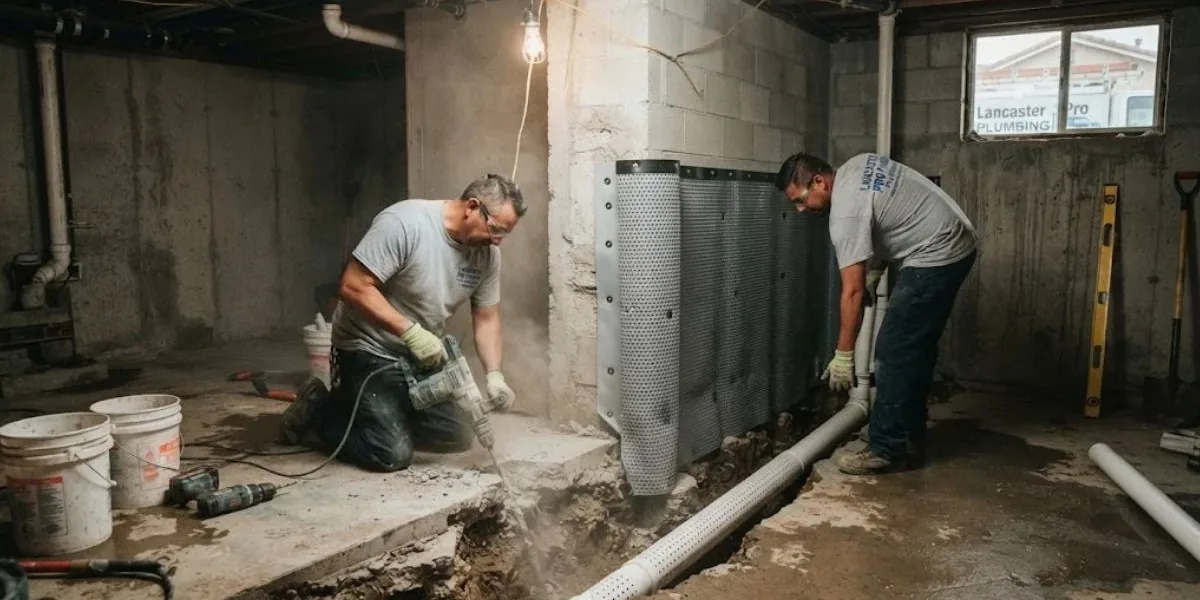
- Open a channel. A strip of the floor along the wall is cut and removed so a drain can sit alongside the footing.
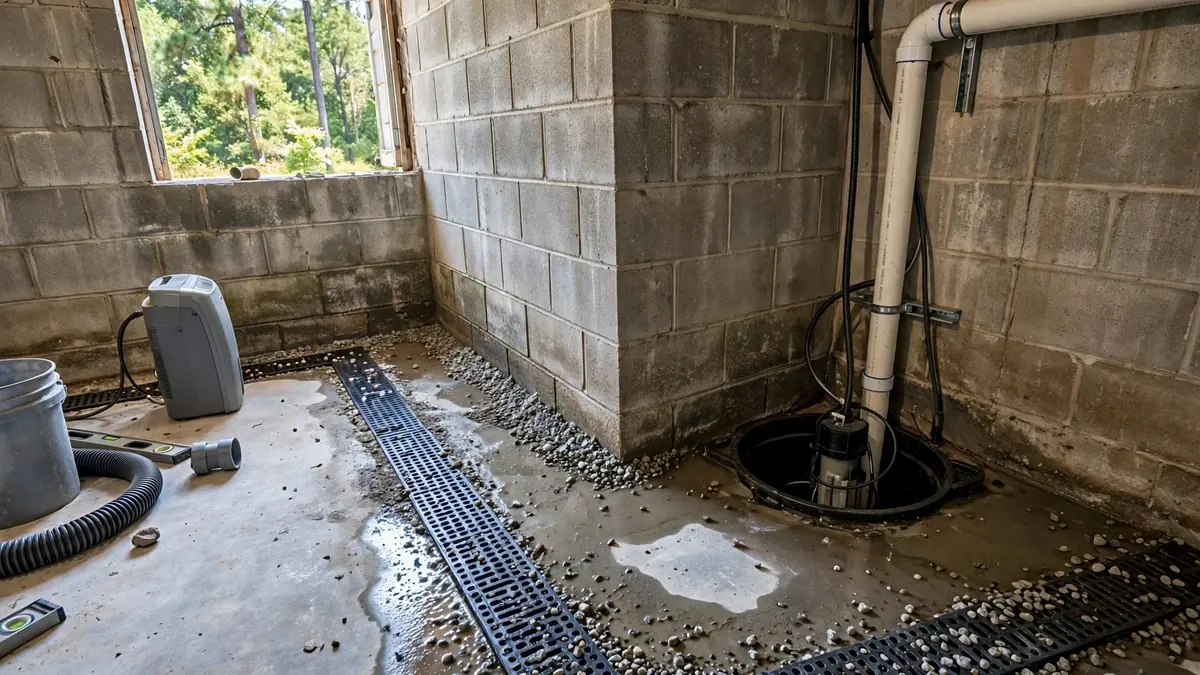
- Lay drain tile. Perforated pipe in gravel collects water under and beside the slab and slopes to the pit.
- Set the pit. A sump basin goes in at the low point, with a pump, a check valve to stop backflow and a float switch.
- Run the discharge. A pipe carries water well away from the house, and it should not ice up near the outlet.
- Close and test. The floor is patched with concrete, and the pit is filled with water to test the pump and the float.
Damp air, musty smell and mold: keeping it sensible
Humidity is not always a leak, and mold advice is best kept cautious.
- Run a dehumidifier in the basement and empty it often.
- Watch for white mineral deposits on walls, which show moisture moving through masonry.
- Dry any wet items within a day or two, and discard soaked carpet or cardboard.
- Do not paint over damp walls, since the paint peels and hides the source.
- If a musty smell stays after the area is dry, have the source checked.
- Large or recurring mold is a job for a qualified remediator, and the plumber's role is stopping the water.
What moves the cost of a dry basement project
A small sump pump replacement and a full perimeter drain are very different jobs, and the quote should say which one you are getting.
- Length of drain needed. A single wet wall is a short run, while a full perimeter is much longer.
- Floor type and finish. Bare concrete is simple, but a finished basement adds removal and rebuilding.
- Pump and backup. A basic pump costs less than a pump with a battery backup or a water-powered backup.
- Discharge route. A short run to a safe spot is easy, while a long run needs more pipe and planning.
- Condition of the walls. Cracks and bowing may need work from another trade.
Homeowners insurance policies often treat sudden and accidental damage differently from gradual leaks or seepage, and many exclude groundwater and sewer backup unless an endorsement is added. Read your policy or ask your agent before assuming.
You get a clear price before work starts. Call (609) 547-1417 for your real number.
A walk around the house before you call
Stand outside during the next rain and look at where the downspouts end and which way the ground slopes. Clear gutters, extend each downspout several feet from the foundation, and check that window wells have drains. These small fixes cost little and sometimes end the problem.
If the basement still takes water, start with a sump pump check, which is the plumbing piece most likely to fail. For sewage coming up from a floor drain, drain cleaning or a sewer line repair is the right path instead, and a leak inside the walls belongs to a leak search. Homeowners in Mount Holly and nearby are served by the same 24/7 emergency line.
Wet basement questions homeowners ask
A plumber handles interior drain tile, sump pits, pumps and discharge lines. Exterior excavation, sealing the foundation and structural wall repair may need another contractor, and an honest plumber says so.
Rain raises groundwater and overloads gutters and the soil near the wall. The water finds the cove joint, floor cracks or window wells. A sump pump handles water from below, while grading handles water from above.
A standard pump will. The 2011 storm outages in Ramblewood and nearby areas are an example. A battery backup on its own circuit keeps pumping when the power fails.
No. Damp air can come from humidity alone. A dehumidifier helps, and if walls or floors show actual seepage, the source needs fixing.
Keep surfaces dry and the air moving, and discard soaked porous items. If mold is widespread or keeps returning, a remediation specialist is the right call.
Yes. Call the 24/7 line on nights, weekends and holidays. Stay away from the electrical panel if water is near it, and the plumber can pump out and diagnose the cause.