
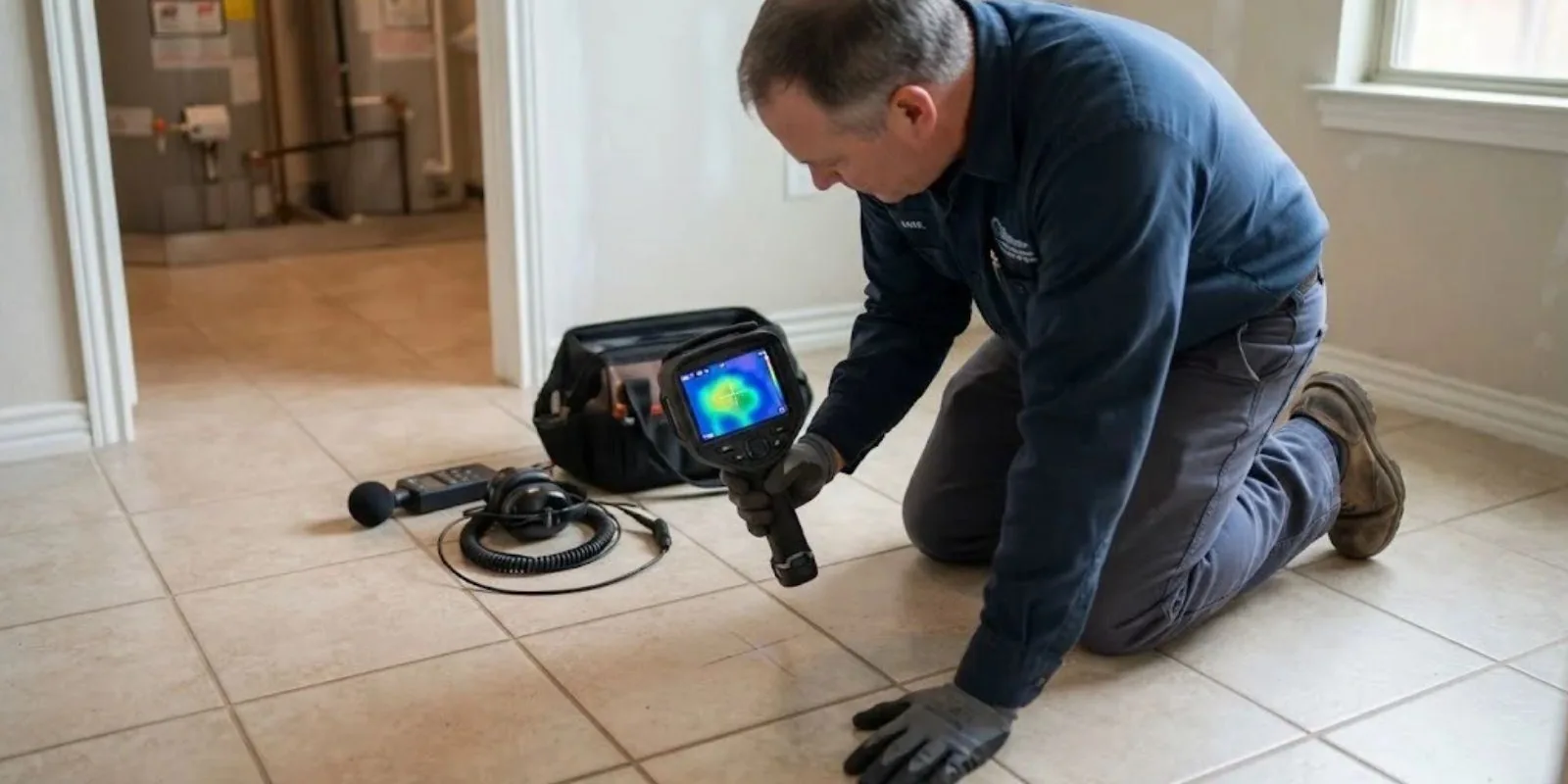
Infrared Camera Leak Detection in Mount Laurel: What It Shows and What It Misses
A thermal camera does not see water. It sees temperature differences, and a skilled plumber reads those differences alongside other tests.
What the camera actually sees
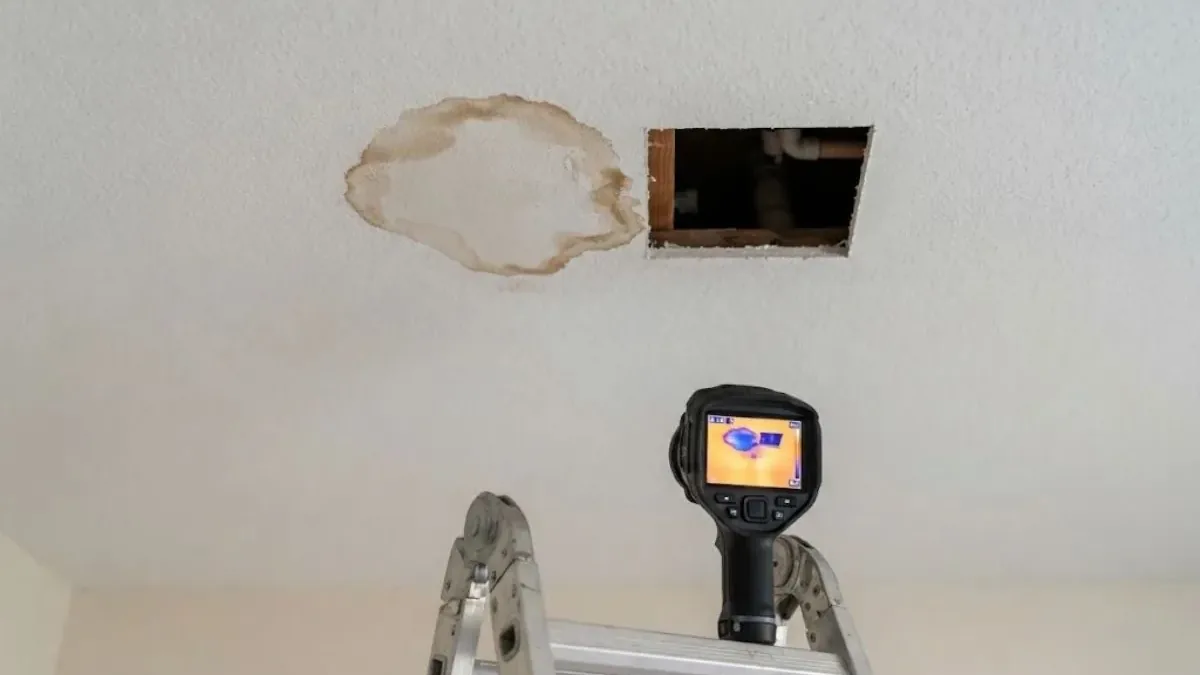
An infrared camera shows surface temperature as a color map. Wet drywall, a slab over a hot water line or a damp ceiling can look cooler or warmer than the dry area around it, so the picture points to where moisture may be. The camera is a clue finder and not a leak finder, because a cool patch can also be an air duct or missing insulation.
That is why a reliable leak search combines the camera with a water meter test, pressure checks and, when needed, acoustic listening gear or moisture meters. The thermal image tells the plumber where to look, and the other tools confirm it.
Four tools that work with the camera
Meter test.
Shut every fixture off and watch the water meter. If the dial still moves, water is escaping somewhere on the property.
Pressure test.
A gauge on an isolated section of pipe shows whether it holds pressure, which separates supply leaks from drain leaks.
Acoustic listening.
Sensitive microphones pick up the hiss of pressurized water leaving a pipe, even under a slab.
Moisture meter.
A probe confirms that the cool spot on the image is truly wet material.
Meter moving with every fixture off? Call the 24/7 line and describe what you see.
Call (609) 547-1417Check this yourself first, in order
These steps cost nothing and often answer the question before anyone arrives.
- Stop all water use. Close faucets, run no appliances, and make sure the ice maker and any irrigation are off.
- Read the meter. Note the reading and any small leak indicator on the dial, then wait an hour without using water.
- Read it again. A changed reading with everything off points to a leak between the meter and the fixtures.
- Close the main valve and retest. If the meter stops after you shut the main inside the house, the leak is inside. If it keeps moving, the leak is on the line outside.
- Call with what you found. Tell the dispatcher the meter result and where you see stains, warm floor spots or wet carpet.
Using Mount Laurel water numbers as your baseline
Local usage note
The township reports average customer use of about 6,000 gallons a month, often over 10,000 in summer. Summer irrigation and pool filling explain much of that jump, so a rise in July is not automatically a leak.
The payoff is a quick sanity check. Compare your own bill to those marks, then run the meter test. If your winter use is well above 6,000 gallons with no extra people in the house, or the meter moves with everything shut off, that is a strong sign to book a leak search.
Which sign points to which kind of leak
| What you notice | Possible source | Next move |
|---|---|---|
| Warm patch on a floor. | Hot water line under a slab or in a floor. | Meter test, then thermal and listening search. |
| Spreading ceiling stain below a bathroom. | Supply or drain leak above. | Thermal image of ceiling, then access check. |
| Meter moves with everything off. | Leak on supply side. | Isolate with main valve, then pinpoint. |
| Musty smell, no visible water. | Wall cavity or crawlspace moisture. | Moisture meter and camera. |
| Yard soft spot, no rain. | Service line outside. | Call before you dig, then locate. |
Call 811 before digging anywhere in the yard. Hitting a buried utility is a bigger problem than the leak.
Limits of thermal imaging
A thermal camera works best when there is a temperature difference. A cold water leak in a cool basement may not show at all. Thick insulation, tile, concrete and metal can hide the pattern, and sun on an outside wall can fake one.
An honest plumber will tell you when the picture is unclear and propose the next test instead of opening a wall on a guess. For the full search process, see our leak detection service.
Stop and call right away if you see these
- Water running from a ceiling light fixture or near the electrical panel. Switch off the breaker only if the panel is dry and reachable, otherwise leave and call 911.
- A sagging, bulging ceiling that holds water.
- A hissing sound from a wall with a warm patch beneath it.
- Standing water in a basement with a running meter.
- A gas smell. Leave the building, call 911 and the gas utility from outside, then call us.
Our 24/7 line takes these calls nights, weekends and holidays.
Older copper and newer plastic show up differently
Supply lines in the township's homes can be copper, plastic or a mix, so the plumber identifies the material first, since it shapes the repair. Pinhole leaks in copper sit inside walls and can run for months before a stain appears. A lead solder note matters too, since the township says lead solder was allowed in home plumbing through 1982, and a leaking joint from that era is a good time to ask about replacement.
Homes in nearby Moorestown and Evesham get the same search, and a leak under a slab on any side of the border is found the same way, with meter, listening and thermal tools together.
What decides the cost of a leak search
A leak search is priced by effort and equipment, not by a flat menu. These factors set it.
- Size of the area. A single bathroom wall is smaller than a whole slab.
- Access. Open basements are quick, finished walls and slabs take longer.
- Method mix. Meter, thermal and listening gear together take more time than one test.
- Repair afterward. Fixing the line is separate, and a pinhole is cheaper than rerouting a slab pipe.
- Timing. After hours calls cost more than a scheduled visit.
Insurance often draws a line between a sudden leak and a slow one, so ask your agent before assuming. Some policies pay for access work and not for the leaking pipe.
Call (609) 547-1417 and describe the damp spot or the jump in your water bill.
Hidden leak and thermal camera questions
Sometimes, if the leak is a hot water line that warms the slab surface. For cold lines it is much less reliable. Acoustic gear and pressure tests usually finish the job.
No. It points to likely spots, and a moisture meter or pressure test confirms them. Trust a plumber who explains why a second test was needed.
It will not. The meter test with the main valve closed tells you which side of the house the leak is on. Outside the meter, the water authority handles its side and our team looks at the private line.
Not necessarily. Township figures show use often passes 10,000 gallons in summer. Run the meter test with everything off. If the dial stays still, the spike is lawn or pool use.
Compare it to the township average of about 6,000 gallons a month. A bill far above that in a low use month deserves a meter test. Read it, wait, and read it again. Once the leak is located, the repair is an ordinary plumbing job on the exposed pipe.