
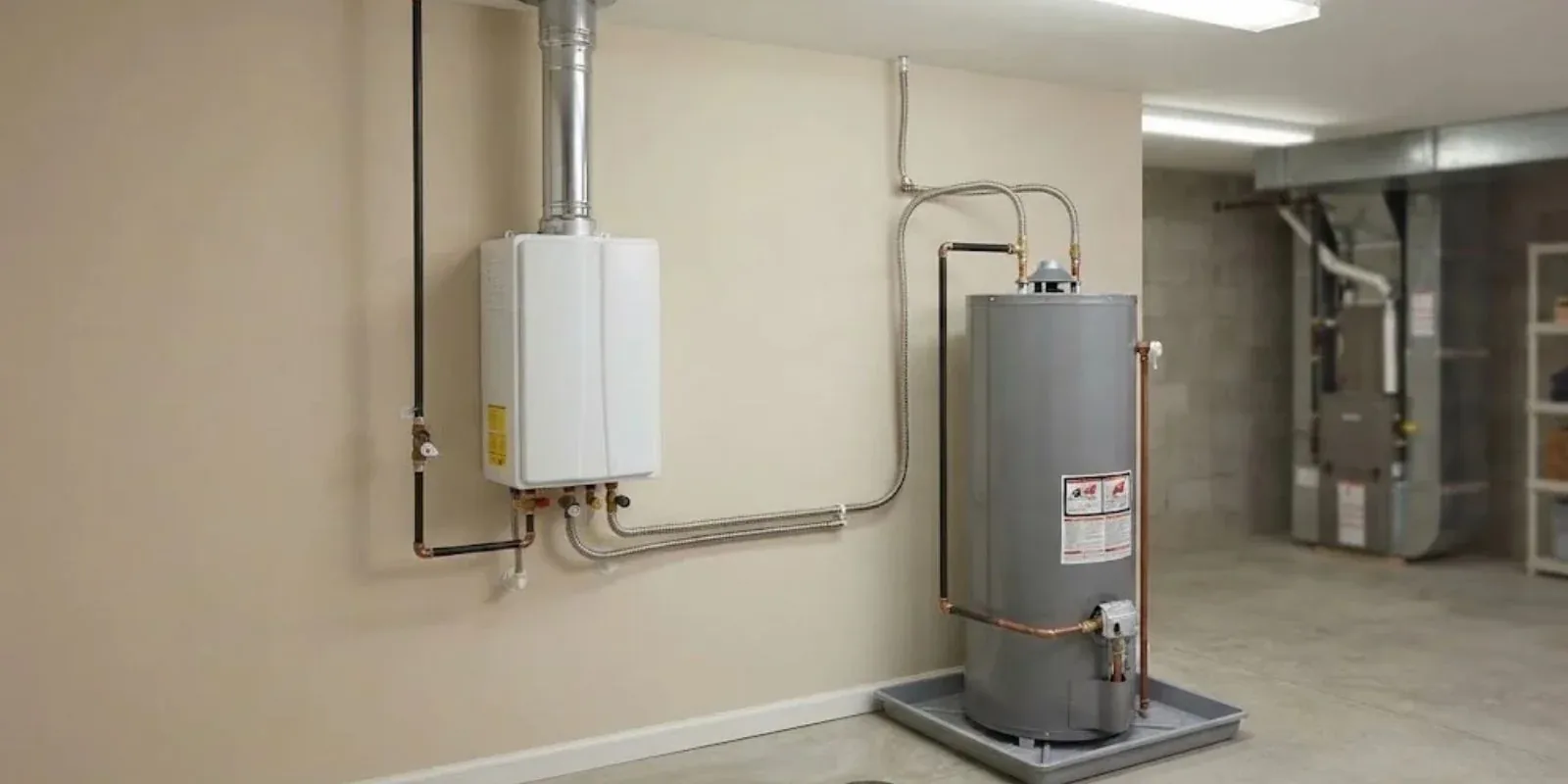
Tankless Water Heater Maintenance Cost for Mount Laurel, NJ Homes
Maintenance on a tankless heater is mostly a flush, a filter clean and a safety check. What it costs depends on a handful of conditions that a plumber can see in minutes.
The short answer on what you will pay
There is no single price for tankless water heater maintenance, because the work ranges from a quick filter rinse to a long descaling circulation with a check on venting and combustion. The biggest swing factors are how much mineral scale has built up, whether the heater has isolation valves for flushing, and how easy the unit is to reach. We do not publish dollar figures here, so call the 24/7 line for a price on your unit.
What we can do is show you what moves the price up or down, so you can judge any quote you receive.
Six things that set the price of a tankless service visit
Scale level
A heat exchanger with light scale flushes quickly. A heavily coated one needs a longer descaling cycle, sometimes more than one.
Isolation valves
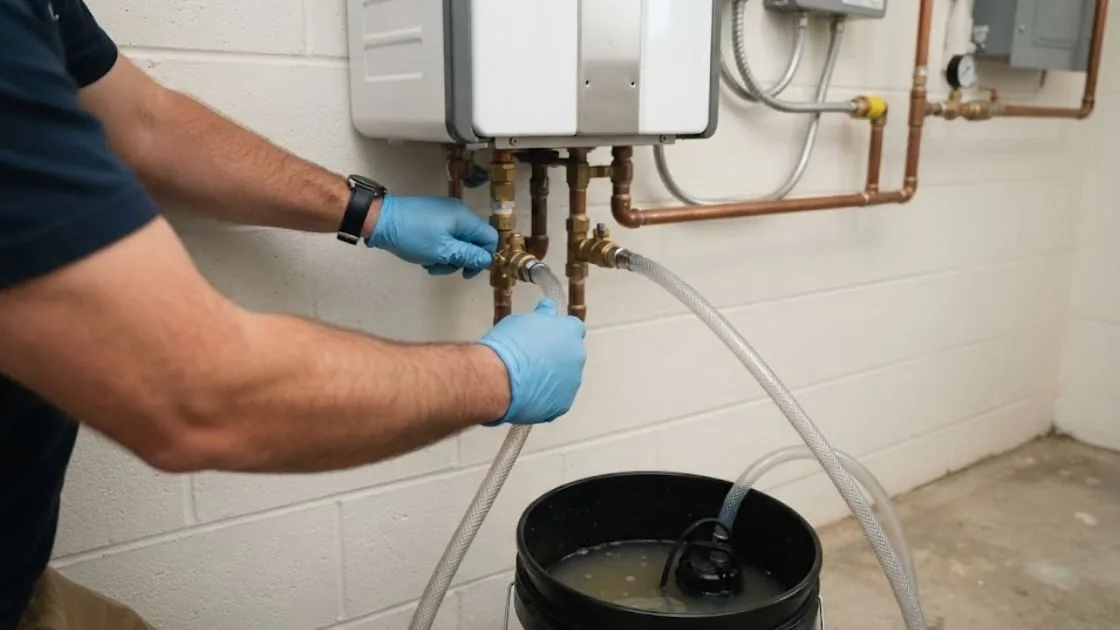
Service valves let a plumber connect a pump and hoses without cutting into pipe. A heater without them needs valves added first, which adds labor.
Gas or electric
Gas units add a combustion check, a venting inspection and often a condensate drain on condensing models. Electric units skip those steps.
Access and location
A heater on an open garage wall is quick to service. One in a tight utility closet takes longer to reach.
Last service date
A unit that has never been flushed usually takes more time and may reveal problems that a maintained unit would not.
What the visit finds
A clogged inlet screen, an error code or a worn part turns maintenance into repair, and that is priced separately.
What each maintenance task involves
| Task | What the plumber does | What moves the cost |
|---|---|---|
| Descale flush. | Circulates a descaling solution through the heat exchanger, then rinses. | Scale amount, valve access, flush time. |
| Inlet filter clean. | Removes and rinses the small screen on the cold inlet. | Quick unless the screen is damaged. |
| Venting check. | Inspects joints, slope and termination for leaks or blockage. | Vent length and how much is visible. |
| Combustion check. | Measures how cleanly the gas burns. | Tools and unit type. |
| Condensate drain check. | Clears and tests the drain on condensing units. | Only applies to certain models. |
Many manufacturers call for yearly service. Your manual is the place to confirm the schedule for your exact model.
Want a price for a tankless service visit? Call the 24/7 line.
Call (609) 547-1417Local water use and why scale is a given here
Local note
The township's water quality summary lists total hardness from 63 to 138 ppm across the supplies it names, roughly 3.7 to 8.1 grains per gallon. The MUA and New Jersey American Water sit near 80 to 100 ppm. That is moderately hard water, and hard at the upper end, so a heat exchanger will collect scale over time.
The average customer uses about 6,000 gallons a month and often more than 10,000 in summer. More water through the heater means more mineral to deposit. Ask the plumber to look at the scale at your first service and set the interval from what they see, instead of guessing a number.
What you can do yourself and what to leave alone
A homeowner can rinse the inlet screen if the manual shows how, and can keep the area around the unit clear of boxes and chemicals. Reading the error code on the display is also fair game, and the code often tells a plumber exactly where to start.
Flushing the heat exchanger is a job we would only hand to a homeowner who already has isolation valves, a small pump and the right solution. Mistakes can leave a gas unit running dry or damage the exchanger. For a tankless unit that has not been serviced in a long time, tankless water heater service is the safer route.
When to call: signs that maintenance is overdue
- Hot water temperature swings between warm and hot.
- The unit throws an error code that returns after a reset.
- Flow at the tap feels weaker than it did last year.
- You hear popping, rumbling or whistling from the heater.
- The unit has never been flushed since it was installed.
- You see white crust at fittings or the inlet screen.
Some of these also point to a failing part, so the honest answer is that a service visit tells you which it is.
Is servicing worth it or is replacement coming?
Servicing is almost always worth it on a unit that is still running well. It protects the heat exchanger, which is the costliest part. If the exchanger is already cracked or the heater keeps failing after descaling, a replacement conversation makes more sense, and water heater repair can tell you which side of that line you are on.
Homes in Cherry Hill and Moorestown deal with their own mixed water supplies, but the cost drivers above carry over.
How to get a number you can trust
Have the model number, the install date if you know it, and the last service date ready when you call. Tell the dispatcher about any error codes and whether the unit has service valves on the plumbing below it. Call (609) 547-1417 with those details and the dispatcher can tell you what the visit involves.
Tankless upkeep questions, answered plainly
Many manufacturers call for service about once a year, and hard water can push that need sooner. Check the manual for your model and have a plumber look at the scale before settling on a schedule.
Some manuals allow it and some warn against it, so follow yours. Descaling is done only through the unit's isolation valves with a small pump, as the manufacturer directs, and mistakes can harm the heat exchanger. A plumber handles this routinely.
A tank mostly needs a drain and an anode check. A tankless unit has a tight heat exchanger, venting and combustion parts that need careful checks.
Maintenance is usually a homeowner cost. Insurance rarely pays for routine maintenance, so ask your agent what your policy covers.
Yes. The township's summary lists hardness from 63 to 138 ppm across its supplies, which runs moderate to hard at the high end. That is enough to leave scale inside a heat exchanger over time, so regular flushing is part of ownership here. Gas and venting connections on a tankless unit follow the National Standard Plumbing Code that New Jersey adopts.