
Repair a Leaking Water Heater in Mount Laurel: Find the Source First
Some leaks on a water heater are a ten minute fix and some mean the tank is finished. Where the water is coming from tells you which one you have.
Water on the floor around the heater right now
A leaking water heater can flood a basement or utility closet fast, and our 24/7 line is staffed nights, weekends and holidays. While you wait, the goal is to stop the water and remove the hazards.
Do not touch the heater or the floor around it if water is near the electrical panel, an outlet or a gas line.
- Cut the power or the gas. For an electric unit, switch off its breaker, but only if the panel is dry and you can reach it without stepping in water. For gas, turn the gas control to off or pilot.
- Close the cold water valve. The cold supply valve sits on the pipe above the tank. Turning it clockwise stops new water from filling the tank.
- Open a hot tap upstairs. This lets the system breathe so water does not siphon back out the leak.
- Contain the water. Use a mop, towels or a wet vac for standing water. Move boxes and stored items off the floor.
- Know your exits. If you smell gas, leave the building, call 911 and the gas utility from outside, then call us. If you smell burning or see scorching at an electric unit, stay out and call 911.
Do not drain the whole tank onto a finished floor. Wait for the plumber unless the drain valve connects to a hose that reaches a floor drain or outdoors.
Where the water is coming from decides the fix
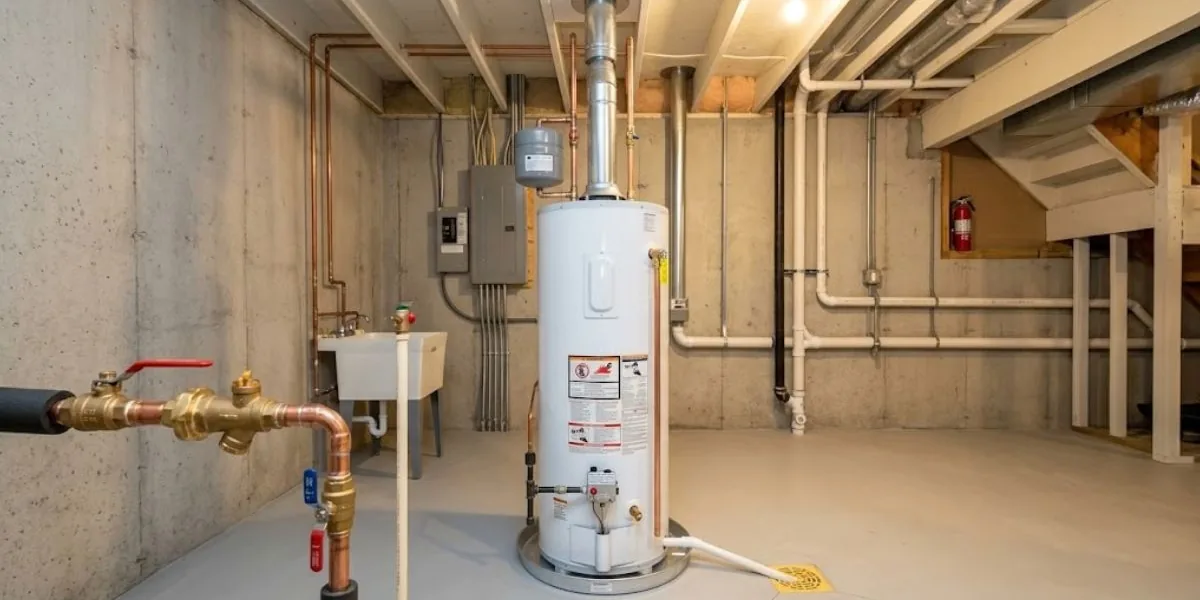
Dry the area, wipe the tank and watch for a few minutes. The drip location narrows it down.
| Leak location | Common cause | Usually fixable? |
|---|---|---|
| Pipe connections on top. | Loose or worn fitting or nipple. | Often yes, a repair. |
| Pipe from the relief valve. | Valve opening from high pressure or temperature. | Yes, but find why it opens. |
| Drain valve at the bottom. | Worn valve or loose hose connection. | Often yes, swap the valve. |
| Heating element gasket on an electric unit. | Failed gasket or loose element. | Often yes, with power off. |
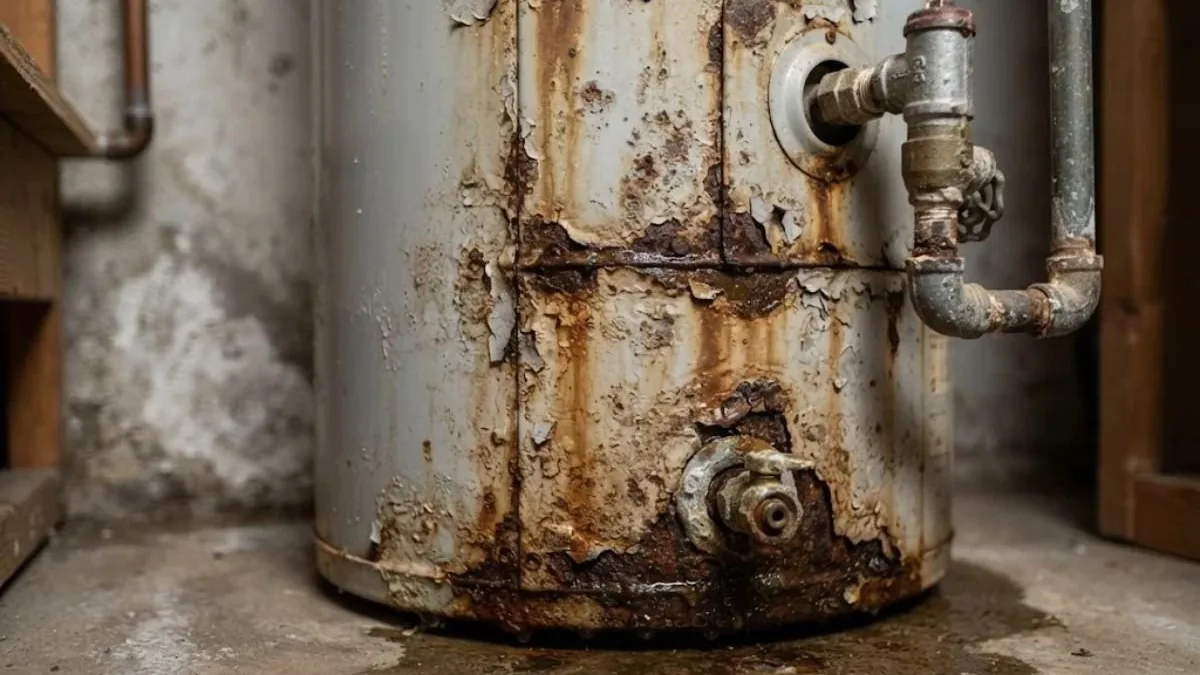
| Seeping from the tank body or underneath. | Corrosion has pierced the steel tank. | No, the tank is done. |
A tank that leaks from the shell cannot be patched safely. Once steel is wet from inside, replacement is the honest answer.
Leak at the tank? Shut off power and water, then call the 24/7 line.
Call (609) 547-1417Repairs a handy homeowner can attempt, and the ones to leave alone
A loose supply fitting or a drain valve that drips can be tightened or replaced by someone comfortable with a wrench. Do it only once the water is off and the tank is drained below the repair point. Have a plumber swap a worn relief valve, and keep the pipe running from it open and pointed down. Capping or plugging a relief valve is dangerous because the tank can overpressure.
Leave gas connections, flue and venting parts, and anything near a burner to a licensed plumber. A cracked vent or bad connection can send carbon monoxide into the house. If a carbon monoxide alarm sounds, get everyone outside and call 911.
What Mount Laurel water does to a tank over time
Local water note
The township's water quality summary lists total hardness from 63 to 138 ppm across the supplies it names. The MUA and New Jersey American Water sit near 80 to 100 ppm, and notes that water from the two can mix. The pH runs between 6.9 and 8.1. Hardness varies by address, so no single figure applies to your home.
The payoff is practical. Moderately hard to hard water leaves mineral scale in the bottom of a tank, and scale insulates the burner or element and traps sediment. A yearly flush can slow that, and a plumber can check the anode rod, which is the metal rod that corrodes first to protect the tank steel.
Repair or replace, a simple rule
If the leak is at a fitting, valve or element, repair is usually the smart move on a tank that is otherwise sound. If the tank body is leaking, replace it. When a tank is old and also needs a costly part, many homeowners find replacement the better use of money.
Ask the plumber to check the age on the rating plate. For help with either path, see our pages on water heater repair and water heater replacement.
What a plumber checks before touching a part
- Dry and watch. The plumber wipes the tank and watches to separate condensation from a real leak, since a gas unit can sweat when it fires up cold.
- Check pressure. A gauge on a hose bib shows whether house water pressure is high, which can force the relief valve to weep.
- Look at the expansion tank. On a closed system, a waterlogged expansion tank lets pressure spike and the relief valve drip.
- Inspect the shell. A flashlight and mirror check under the jacket area and at the bottom for rust trails.
- Give an honest verdict. Repair, replace or monitor, with the reasoning behind it.
Why a leak at the top and a leak at the bottom are different stories
Water at the top often runs down the jacket and looks like a bottom leak. That tricks people into thinking the tank is dead when only a fitting is loose. Dry the whole outside before you decide.
Neighbors in Cherry Hill and Medford run into the same confusion, so the dry and watch test applies wherever you live.
What drives the cost of a heater leak repair
Cost swings widely because a loose fitting and a failed tank are very different jobs. Here is what moves the number.
- Leak source. A fitting or valve is quick, while a tank replacement takes much longer.
- Fuel type. Gas units add venting and gas connection work that electric units do not.
- Parts availability. Common valves and gaskets are simple, but older models may need special order parts.
- Access and layout. A tight closet or attic unit takes longer than an open basement.
- Time of the call. After hours emergency work is priced differently from a daytime visit.
Insurance may treat a burst tank and a slow seep differently, so ask your agent before assuming a slow tank leak is covered.
Call (609) 547-1417 and describe where the water is coming from.
Leaking tank questions answered
Not for long. Even a slow drip can get worse without warning, and a leak at an electric unit can reach live parts. Shut off the power or gas and the cold supply, and book a repair.
It opens when pressure or temperature gets too high. The cause can be a failing valve, high house pressure or a missing expansion tank. Do not cap the pipe.
It speeds up scale and sediment, which stress the tank and heating parts. It does not make a leak by itself, but it shortens the life of a tank. The plumber can flush it and check the anode rod.
No. Patches on the tank shell are not a safe repair. The tank has to be replaced.
Shut off the power or gas and the cold water, then protect the finished floor and wall bottoms from standing water. If water reaches carpet, a wet vac helps while you call. Learn where your shutoffs are before it happens, and see our notes for nearby Evesham homes for the same prep list. The temperature and pressure relief valve and its discharge pipe follow the National Standard Plumbing Code that New Jersey adopts, so never cap or plug them.