
How to Install a Heating Element in a Water Heater in Mount Laurel, NJ
A failed element is one of the most common reasons an electric water heater goes cold or runs out fast. The swap is doable if you respect the power and fill the tank before turning it back on.
Power off at the breaker is not optional
An electric water heater runs on 240 volts, enough to cause serious injury. Switch the heater breaker off at the panel, tape it or tell everyone in the house, and confirm with a voltage tester that the wires at the element are dead before you touch them.
If the panel is wet, the breaker will not stay off, or you do not own a tester, stop and call. This job is for electric tank heaters only. A gas heater has no heating elements.
Which symptom points to which element
Most tank heaters have an upper and a lower element, each with a thermostat. The pattern of what you feel often narrows it down.
| What you notice | Usual suspect | What to do |
|---|---|---|
| No hot water at all. | Upper element, upper thermostat or tripped high limit. | Check the breaker, then call if it keeps tripping. |
| Hot water runs out quickly. | Lower element has failed. | Test and replace the lower element. |
| Water is lukewarm only. | Lower element weak or heavy sediment. | Test the element, then flush the tank. |
| Breaker trips as soon as it resets. | Shorted element or wiring fault. | Stop and call a plumber or electrician. |
| Popping or rumbling during heating. | Sediment on the elements. | Flush the tank and inspect the elements. |
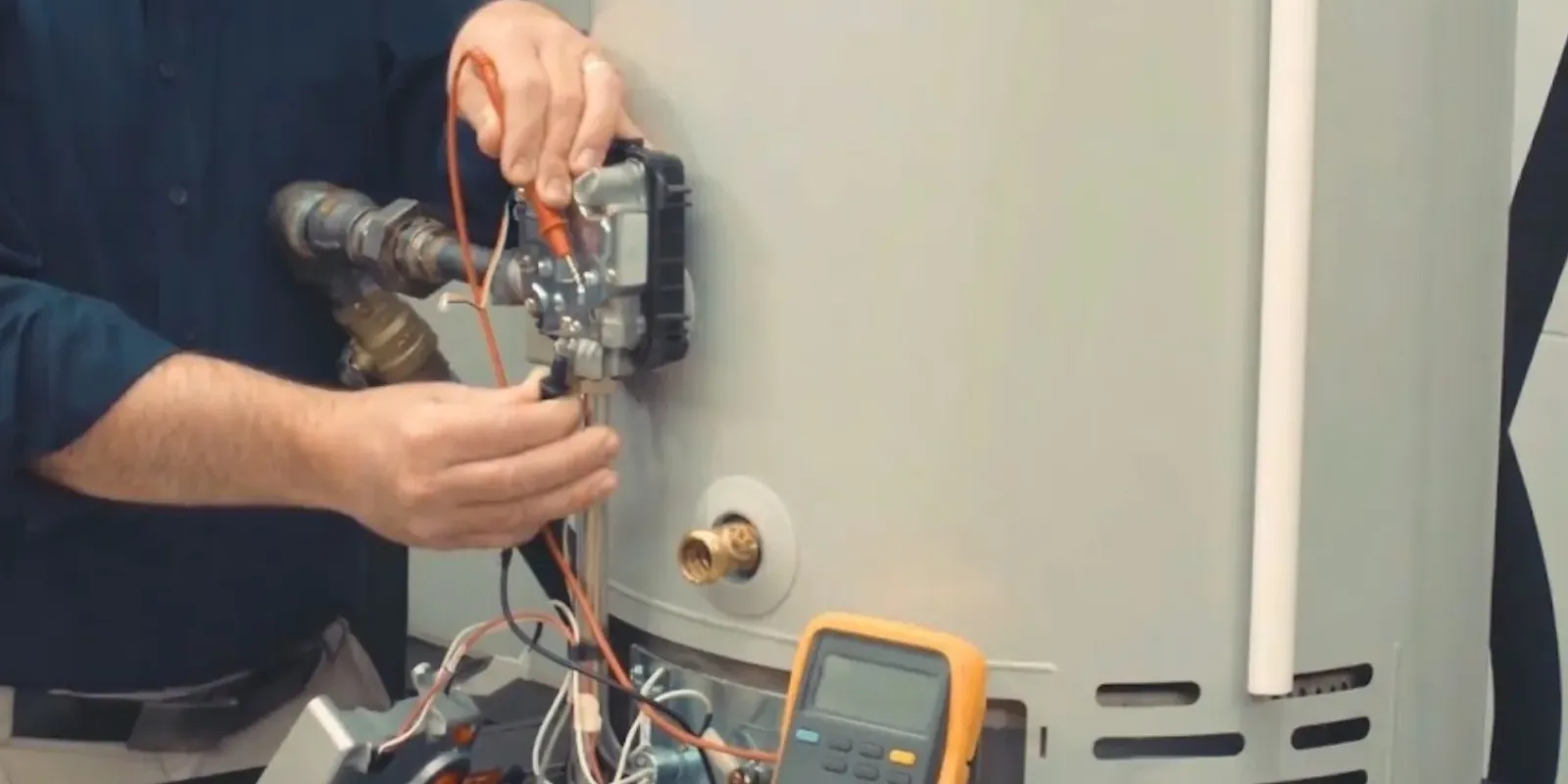
A plumber confirms a bad element with a meter reading across its terminals while the power is off, not by guessing from the symptom alone.
The swap from breaker to hot water
- Kill the power and verify it. Breaker off, tester on the wires. Do not trust the breaker label alone.
- Shut the cold water supply to the heater. Close the valve on the cold inlet, then open a hot faucet in the house to relieve pressure and let air in before you touch the drain valve.
- Drain the tank below the element. Attach a hose to the drain valve and run it to a floor drain or outdoors. Let the water level drop below the element you are changing.
- Remove the access panel and insulation. Fold the insulation back, take photos of the wire positions, then disconnect the wires from the element terminals.
- Unscrew the old element. Use an element wrench or a deep socket that fits. Some elements are held by bolts and a flange instead of threads, so check yours before you force anything.
- Match the replacement exactly. Wattage, voltage and mounting style must match the label. A different wattage can overload the circuit or underheat the tank.
- Install the new element with a fresh gasket. Clean the tank seat, thread it in, snug it, then reconnect the wires exactly as photographed.
- Fill the tank completely before power returns. Turn the cold supply on and wait for a steady stream from the open hot faucet. Only then close the faucet and switch the breaker on.
Tester missing or breaker tripping? Call the 24/7 line before you open the panel.
Call (609) 547-1417What Mount Laurel water does to an element
Local note
The township's water quality summary lists total hardness from 63 to 138 ppm across the supplies it names, about 3.7 to 8.1 grains per gallon. The MUA and New Jersey American Water sit near 80 to 100 ppm. It also lists a pH between 6.9 and 8.1. Hard water leaves mineral scale on a submerged element, and scale forces the element to run hotter, which shortens its life.
So the sensible habit here is to look at the old element when you pull it. A thick crust means the tank holds sediment too, and flushing the tank when you change the element costs little extra effort. Do not claim your own tap reads at one number, because supply can mix by address. Ask the Mount Laurel MUA or your supplier if you want specifics.
The dry fire mistake that ruins a new element
The most common way to destroy a brand new element is to switch the power on before the tank is full. An element that is not under water can burn out in seconds, and you will not know until you wait for hot water that never arrives.
Fill the tank with the hot faucet open, wait for water to run without sputtering, and only then restore the breaker. After an hour, check the gasket and the drain valve for drips. If you find one, shut off the power and water before you tighten anything.
When a new element will not fix it
If the tank leaks from the base, the shell is rusted through, or the heater is well into its second decade, an element swap is lipstick on a failing tank. Stop and plan a water heater replacement instead. A heater that has lost heat because of sediment buildup can often be saved with a flush, but one that leaks cannot be repaired.
If you would rather not handle the wiring, a plumber can take over from the testing stage through the refill. The same help is available to Evesham and Moorestown homes, and water heater repair covers elements, thermostats and relief valves.
Have these ready before you start
- A non-contact voltage tester or a multimeter.
- An element wrench or a deep socket that matches the old element.
- The replacement element and gasket, matched to the heater label.
- A garden hose for draining and a bucket for the first splash.
- A flashlight and a phone to photograph the wiring.
- Gloves, eye protection and a dry place to stand.
If you are missing the tester, do not start. That one tool is the line between a safe job and a risky one.
Calling for help without guessing at the cost
Cost depends on how many elements fail, whether the tank needs a flush, and whether the thermostats or wiring are also worn. Call (609) 547-1417 if the element, the thermostat or the tank looks like more than you want to handle. The 24/7 line works nights, weekends and holidays.
Heating element questions from electric heater owners
With the power off and the wires disconnected, a multimeter set to resistance shows a reading across the terminals for a good element. No reading usually means it is open. A reading to ground means it is shorted. Skip this if you are unsure how to use the meter.
Not always. If one failed and the other tests fine, you can leave it. If the heater is old and the second element is crusted with scale, replacing both while the tank is drained saves a second visit.
No. The element is submerged, so the water must fall below it. Draining only part of the tank is enough, but opening the port on a full tank floods the area.
A shorted element, a loose wire, or a heater switched on with an empty tank can trip it. Switch it off, check your wiring photos, and call a plumber if it trips again.
It can. The township's summary lists hardness from 63 to 138 ppm across its supplies, and mineral scale on the element makes it run hotter. Flushing the tank each time you service the heater helps. If you are not trained for electrical work, call a plumber, and note that relief valves and connections follow the National Standard Plumbing Code that New Jersey adopts.